Navigating the waters of maritime licensing can be as challenging as navigating the open sea itself. Whether you’re dreaming of commanding a fishing charter, operating a tour boat, or pursuing a professional maritime career, a captain’s license is your gateway to these opportunities. This comprehensive guide breaks down everything you need to know about obtaining, maintaining, and upgrading your captain’s license in the United States.
From understanding the different types of licenses to meeting sea service requirements and navigating the application process, we’ll chart a clear course through the sometimes confusing waters of maritime certification. Let’s set sail on your journey to becoming a licensed captain.
What Is a Captain’s License and Why It Matters
A captain’s license, officially known as a Merchant Mariner Credential (MMC), is a professional certification issued by the United States Coast Guard. This license verifies that you possess the knowledge, skills, and experience necessary to safely operate commercial vessels.
Unlike recreational boating, which typically requires only basic safety education, operating vessels commercially—whether carrying passengers for hire or transporting goods—requires proper licensing under federal regulations.
Why a Captain’s License Is Important
Having a captain’s license isn’t just about legal compliance—it opens doors to numerous professional opportunities in the maritime industry. Licensed captains can pursue careers in various sectors, including:
- Charter fishing operations
- Tour and sightseeing vessels
- Ferry services
- Commercial shipping
- Yacht delivery and management
- Maritime instruction and education
Beyond career opportunities, a captain’s license demonstrates your commitment to maritime safety and professionalism. It signifies that you’ve invested time in learning navigation rules, emergency procedures, and proper vessel operation—skills that enhance safety for you, your passengers, and others on the water.
Ready to Start Your Captain’s License Journey?
Find USCG-approved courses that will prepare you for the examination and guide you through the application process.
Types of Captain’s Licenses Available
The U.S. Coast Guard offers several types of captain’s licenses, each with specific qualifications and operational limitations. Understanding these different licenses is crucial for determining which one aligns with your career goals and experience level.
Operator of Uninspected Passenger Vessels (OUPV/Six-Pack)
The OUPV license, commonly known as the “Six-Pack,” is the entry-level captain’s license and one of the most popular options for those entering the maritime industry.
OUPV/Six-Pack License Details:
- Passenger Limit: Allows operation of vessels carrying up to six paying passengers
- Vessel Size: Limited to uninspected vessels up to 100 gross tons
- Operating Area: Available with Inland, Great Lakes, or Near Coastal endorsements
- Sea Service Required: Minimum 360 days of documented sea time
- Minimum Age: 18 years old
Master Licenses
Master licenses allow operation of larger vessels and carrying more than six passengers. These licenses come with different tonnage ratings and operational areas.
Master Inland
- Operate on inland waters only
- Can carry more than six passengers
- Available in 25, 50, or 100 ton ratings
- Requires 360 days sea service
Master Near Coastal
- Operate up to 200 miles offshore
- Can carry more than six passengers
- Available in 25, 50, or 100 ton ratings
- Requires 720 days sea service
Master Great Lakes
- Operate on Great Lakes waters
- Can carry more than six passengers
- Available in 25, 50, or 100 ton ratings
- Requires specific Great Lakes experience
Specialized Endorsements
In addition to the basic license types, captains can add various endorsements to expand their operational capabilities:
| Endorsement | Description | Requirements |
| Assistance Towing | Allows commercial towing operations | Additional examination, no specific sea time |
| Sailing | Required for operating inspected sailing vessels | 180 days experience on sailing vessels |
| STCW (Standards of Training, Certification and Watchkeeping) | Required for international voyages and vessels over 200 tons | Additional training in firefighting, survival, first aid |
| Radar Observer | Required for vessels equipped with radar | Specialized radar training course |
Eligibility Requirements for a Captain’s License
Before applying for any captain’s license, you must meet several basic eligibility requirements established by the U.S. Coast Guard. These requirements ensure that licensed captains possess the necessary experience, knowledge, and physical capabilities to safely operate vessels.
Age Requirements
The minimum age requirement varies by license type:
- OUPV (Six-Pack): Minimum 18 years old
- Master License: Minimum 19 years old
Sea Service Requirements
Sea service refers to your documented time spent operating or working aboard vessels. This is perhaps the most critical requirement for obtaining a captain’s license.
| License Type | Minimum Sea Service | Recent Experience |
| OUPV (Six-Pack) | 360 days total | 90 days within past 3 years |
| Master Inland | 360 days total | 90 days within past 3 years |
| Master Near Coastal | 720 days total (360 on near coastal waters) | 90 days within past 3 years |
| Master Great Lakes | 360 days total (90 on Great Lakes) | 90 days within past 3 years |
Important Sea Service Notes:
- One day of sea service equals 8 hours (no overtime counted)
- Sea service can be accumulated from age 16 onward
- Service must be properly documented on USCG Form CG-719S or equivalent
- Service can be on recreational or commercial vessels
Medical and Physical Requirements
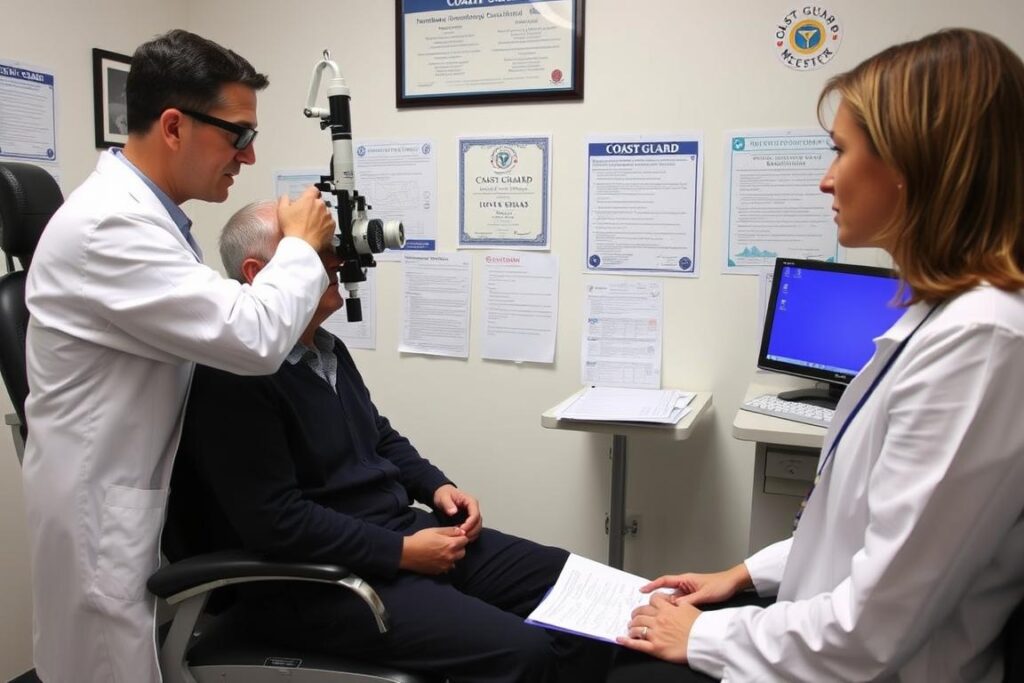
All applicants must pass a physical examination to ensure they’re medically fit to operate vessels safely. The examination includes:
- General physical examination
- Vision test (color and acuity)
- Hearing test
- Blood pressure check
- Review of medical history
The medical examination must be performed by a licensed physician using the Coast Guard’s CG-719K form. Some medical conditions may require additional documentation or waivers.
Drug Testing Requirements
All applicants must:
- Pass a chemical test for dangerous drugs
- Provide proof of enrollment in a random drug testing program
- Sign a statement of non-drug dependency
Citizenship and Security Requirements
Applicants must be either:
- U.S. citizens, or
- Lawful permanent residents (with some restrictions on license types)
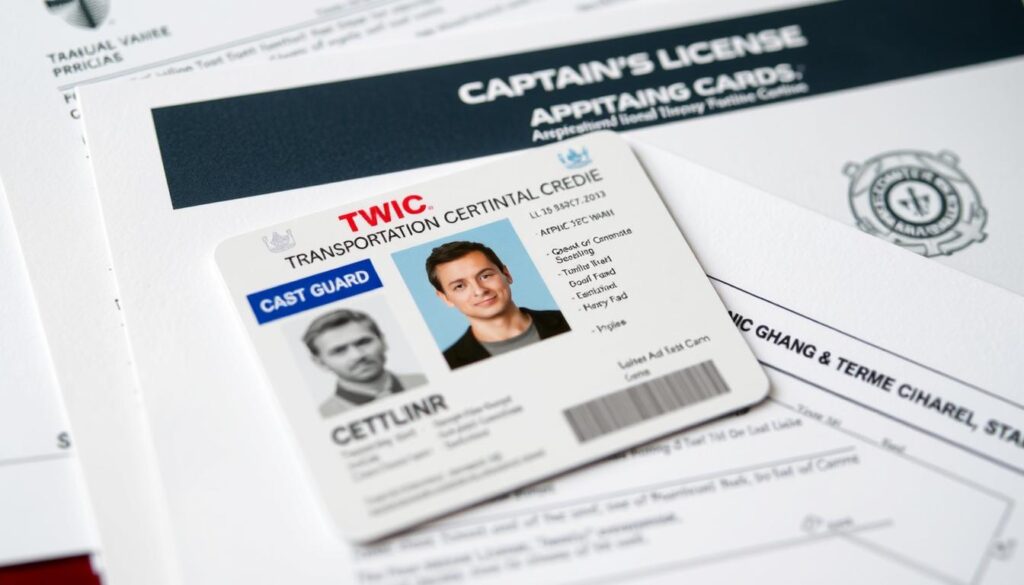
Additionally, all applicants must obtain a Transportation Worker Identification Credential (TWIC) card from the Transportation Security Administration, which involves a security background check.
Need Help Documenting Your Sea Service?
Professional maritime schools can help you properly document your experience and prepare your application materials.
License Restrictions and Who Needs Certification
Understanding who legally requires a captain’s license and the operational restrictions that come with different license types is essential for compliance with maritime regulations.
Who Needs a Captain’s License?
Generally, you need a captain’s license if you’re:
- Operating vessels “for hire” – Whenever money changes hands for vessel operation
- Carrying paying passengers – Whether for tours, fishing charters, or transportation
- Transporting cargo commercially – Moving goods for payment
- Operating commercial fishing vessels – Beyond certain size limitations
- Working as a delivery captain – When paid to move vessels
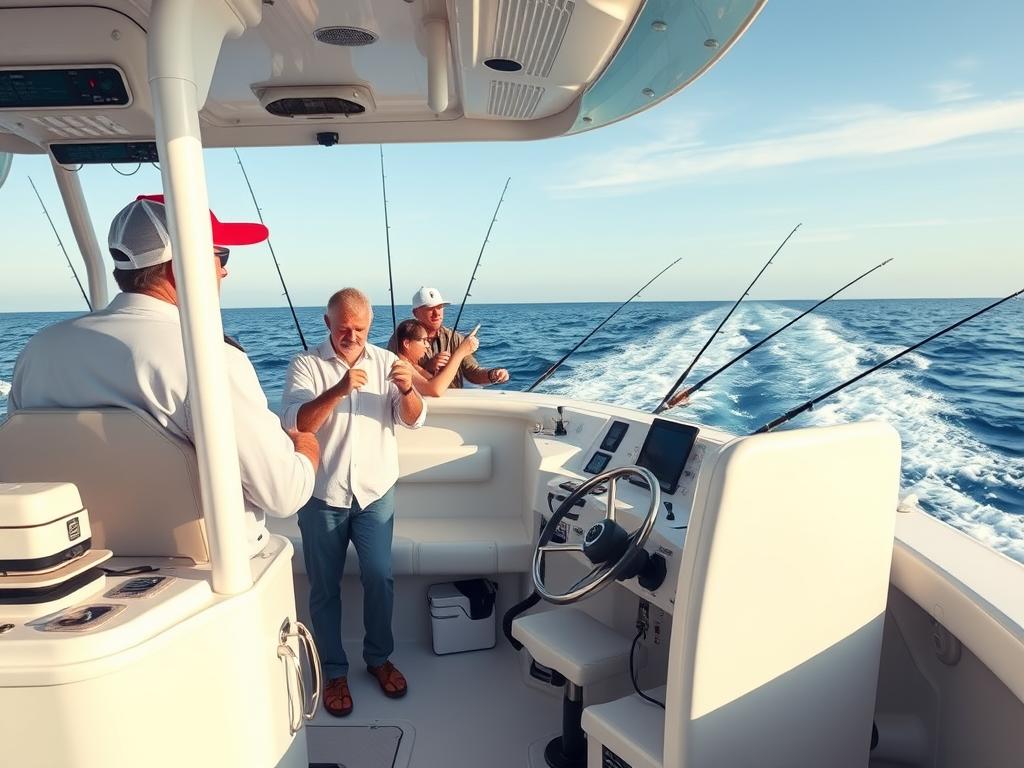
You DON’T need a captain’s license if you’re:
- Operating your own recreational vessel
- Operating a friend’s boat without compensation
- Sharing expenses equally among all aboard (not for profit)
- Participating in sailboat races or regattas (unless carrying paying passengers)
Common License Restrictions
Each license type comes with specific operational restrictions:
| License Type | Passenger Restrictions | Vessel Size Restrictions | Geographical Restrictions |
| OUPV (Six-Pack) | Maximum 6 paying passengers | Up to 100 gross tons | Limited to endorsement area (Inland, Great Lakes, or Near Coastal) |
| Master Inland 25/50/100 Ton | More than 6 passengers allowed | Limited to tonnage on license | Inland waters only |
| Master Near Coastal 25/50/100 Ton | More than 6 passengers allowed | Limited to tonnage on license | Up to 200 miles offshore |
Additional Operational Restrictions
Beyond the basic license limitations, be aware of these additional restrictions:
- Inspected vs. Uninspected Vessels: Some licenses only permit operation of uninspected vessels
- Endorsement Requirements: Special operations like towing or sailing may require additional endorsements
- International Limitations: STCW endorsement required for international voyages
- Night Operations: Some licenses may have restrictions on nighttime operations
- Radar Equipment: Radar observer endorsement may be required for vessels with radar
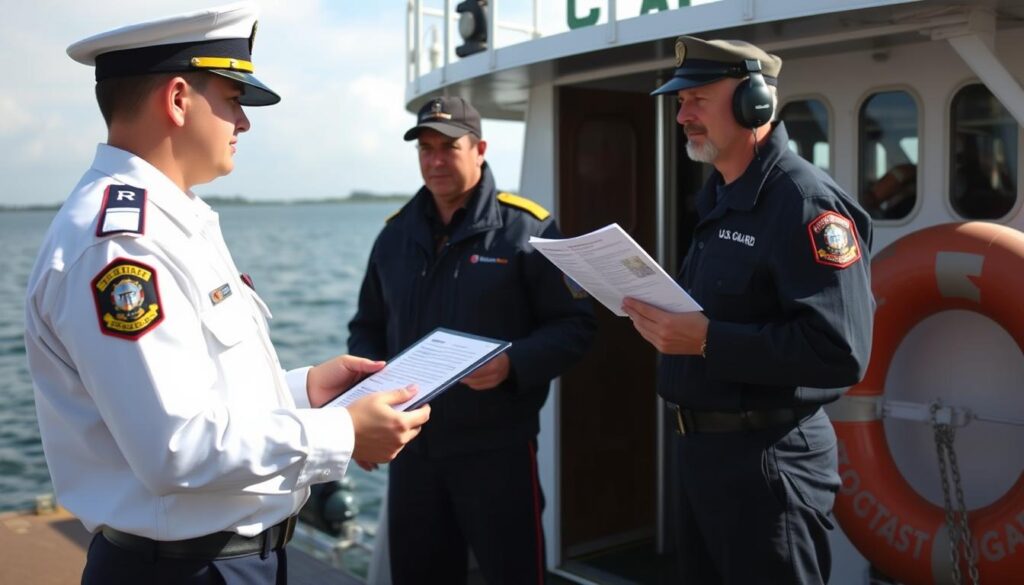
Geographic Limitations: Where You Can Operate
Different captain’s licenses come with specific geographic boundaries that determine where you can legally operate vessels. Understanding these limitations is crucial for compliance and safety.
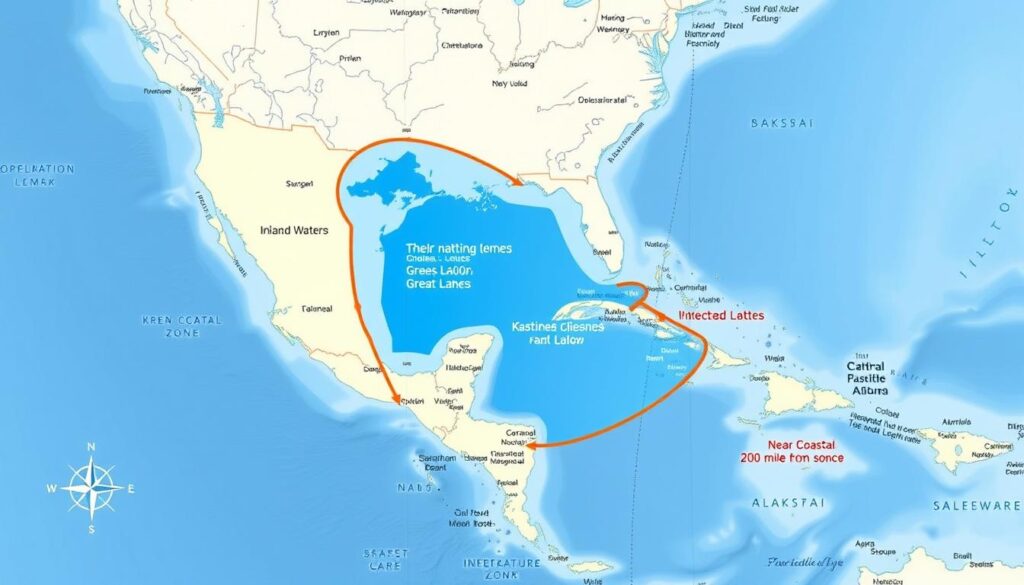
Understanding Operating Boundaries
Inland Waters
Includes rivers, lakes, bays, sounds, and other internal waterways within the demarcation lines established by the U.S. Coast Guard.
- Protected harbors
- Rivers and canals
- Lakes and reservoirs
- Intracoastal Waterway
Great Lakes
Covers operations on the five Great Lakes and their connecting waterways.
- Lake Superior
- Lake Michigan
- Lake Huron
- Lake Erie
- Lake Ontario
- Connecting channels
Near Coastal
Allows operation on coastal waters up to 200 miles offshore.
- Ocean coastlines
- Gulf of Mexico
- Offshore islands
- U.S. territorial waters
License-Specific Geographic Limitations
Each license type has specific geographic boundaries where operation is permitted:
| License Type | Geographic Limitations | Notes |
| OUPV Inland | Inland waters only | Cannot operate beyond the Demarcation Line |
| OUPV Great Lakes | Great Lakes and inland waters | Includes connecting waterways |
| OUPV Near Coastal | Up to 100 miles offshore | Includes inland and Great Lakes waters |
| Master Inland | Inland waters only | Can serve as mate on near coastal vessels with additional experience |
| Master Great Lakes | Great Lakes and inland waters | Specific Great Lakes experience required |
| Master Near Coastal | Up to 200 miles offshore | Includes all U.S. domestic waters |
Important: Operating beyond your license’s geographic limitations is a serious violation that can result in fines, license suspension, or revocation. Always verify your operating boundaries before planning voyages.
International Operations
For captains planning to operate internationally, additional requirements apply:
- STCW Endorsement: Required for international voyages on vessels over 200 gross tons
- Foreign Port Regulations: Must comply with host country maritime regulations
- Passport and Visas: Required for international travel
- International Certificate of Competence: May be required in some countries
Step-by-Step Application Process
Obtaining your captain’s license involves several steps, from gathering documentation to passing examinations. Following this process carefully will help ensure your application proceeds smoothly.
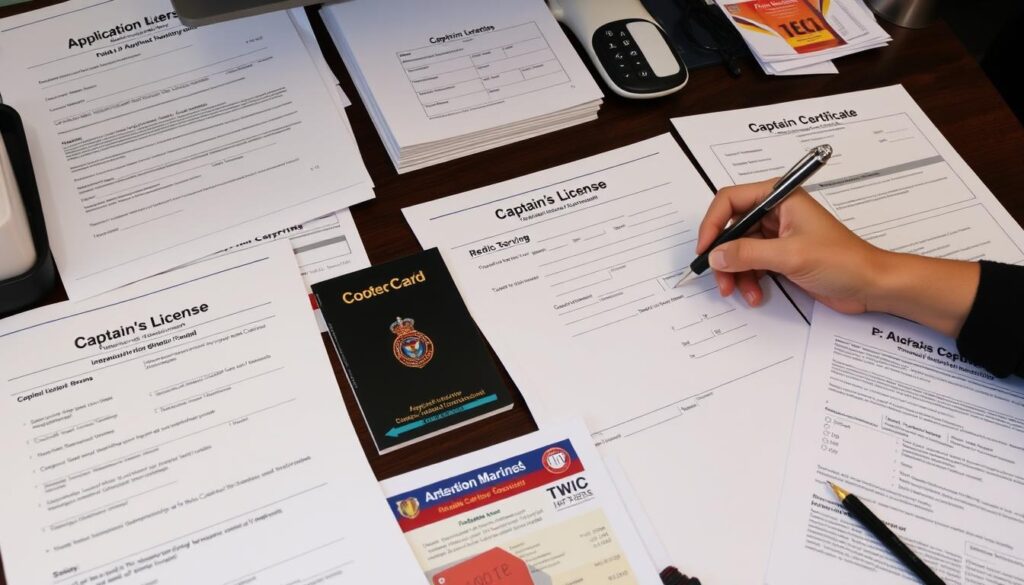
Step 1: Gather Required Documentation
Before beginning your application, collect these essential documents:
- Sea Service Documentation: Complete Form CG-719S for each vessel
- Identification: Government-issued photo ID
- Medical Examination: Completed Form CG-719K by a licensed physician
- Drug Test Results: From an approved testing facility
- CPR/First Aid Certification: From a recognized provider
- TWIC Card: Or proof of application
Step 2: Complete Required Training
While not mandatory for all licenses, USCG-approved training courses significantly improve your chances of success:
- License Preparation Courses: Cover all examination topics
- Rules of the Road Training: Navigation rules and regulations
- Chart Navigation: Plotting courses and positions
- Safety Procedures: Emergency responses and safety protocols
- Specialized Endorsements: Additional training for specific operations
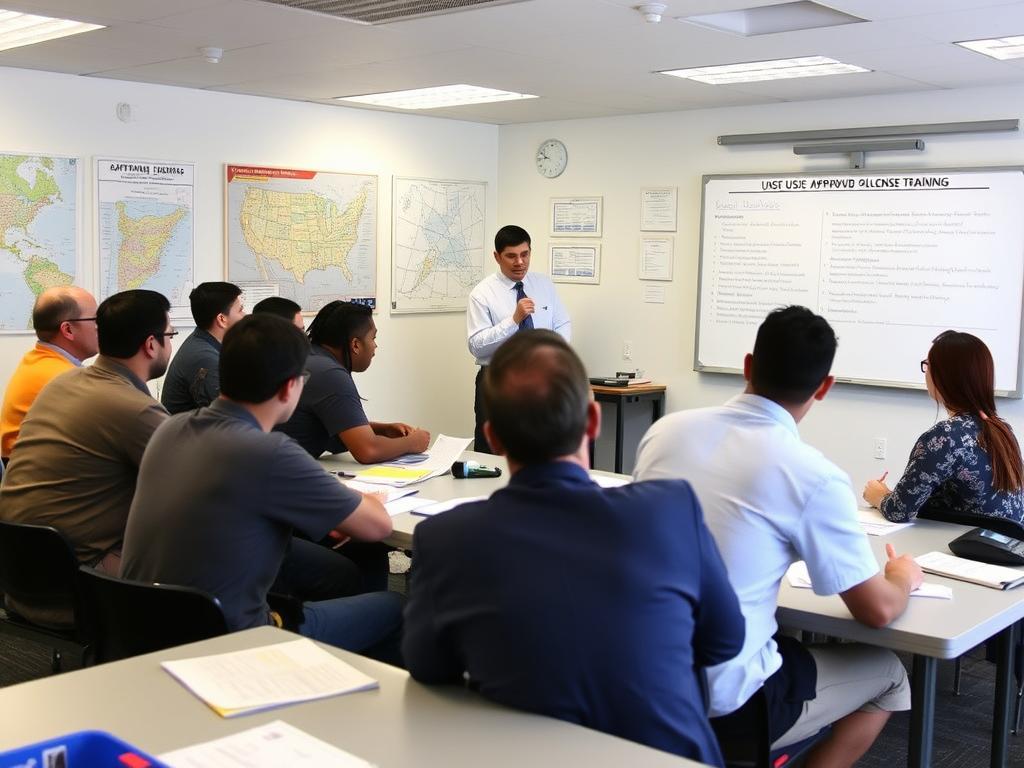
Prepare for Success with Professional Training
USCG-approved courses significantly increase your chances of passing the examination on your first attempt.
Step 3: Pass the Examination
The captain’s license examination consists of several modules:
- Rules of the Road: Navigation rules and regulations (90% passing score required)
- Navigation General: Chart work, position fixing, and voyage planning
- Navigation Problems: Practical navigation calculations
- Deck General: Seamanship, vessel handling, and safety
- Deck Safety: Emergency procedures and safety equipment
Examination Options:
- Coast Guard Regional Exam Centers: Take exams directly at USCG facilities
- Approved Course Completion: Some training centers can administer exams
Step 4: Submit Your Application
Once you’ve passed your examination, submit your complete application package:
- Complete Application Form CG-719B
- Include all supporting documentation
- Pay applicable fees through pay.gov
- Submit to the National Maritime Center (NMC) or Regional Exam Center
Step 5: Receive Your License
After approval, you’ll receive your Merchant Mariner Credential (MMC) by mail. The processing time typically ranges from 4-8 weeks, though it can vary based on application volume and completeness.
Renewal Process and Requirements
A captain’s license is valid for five years, after which it must be renewed to remain active. Understanding the renewal process helps ensure you maintain your professional credentials without interruption.
When to Renew
You can apply for renewal up to 8 months before your license expiration date. The Coast Guard recommends applying at least 3 months before expiration to ensure continuous validity.
Important: If your license expires, you have a one-year grace period during which you can renew without retaking the full examination. After one year, you’ll need to reapply as a new applicant.
Renewal Requirements
To renew your captain’s license, you’ll need to provide:
- Renewal Application: Completed Form CG-719B
- Sea Service: Documentation of at least 360 days of service during the previous five years, OR completion of an approved refresher course
- Medical Examination: New Form CG-719K completed within the last 12 months
- Drug Testing: Proof of a drug test within the last 6 months and continued enrollment in a random testing program
- TWIC Card: Valid card or proof of application
- Fees: Payment of applicable renewal fees
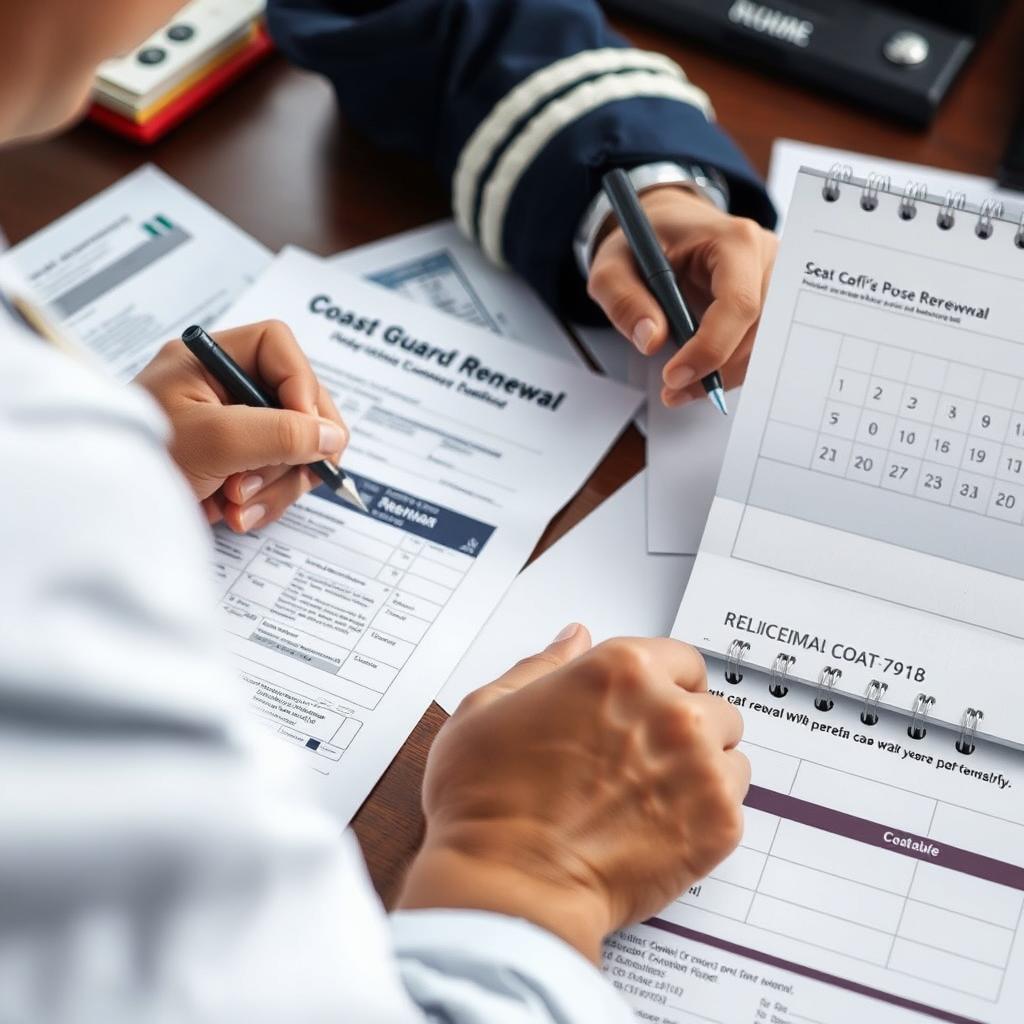
Renewal Without Recent Sea Service
If you haven’t accumulated 360 days of sea service during the previous five years, you have alternative options:
- Refresher Course: Complete a USCG-approved refresher training course
- Limited License: Apply for a license with operational limitations
- Combination: Use a combination of sea service and training
Renewal Process Steps
- Gather all required documentation
- Complete renewal application Form CG-719B
- Pay renewal fees through pay.gov
- Submit complete package to the National Maritime Center
- Track application status through the NMC website
Don’t Risk License Expiration
Professional maritime schools offer renewal assistance and refresher courses to simplify the process.
Upgrade Pathways to Higher Licenses
As you gain experience and sea time, you can upgrade your captain’s license to expand your operational capabilities and career opportunities. Understanding these upgrade pathways helps you plan your professional development.
From OUPV to Master License
The most common upgrade path is from an OUPV (Six-Pack) license to a Master license:
| Upgrade Path | Additional Requirements | Benefits |
| OUPV to Master Inland 25 Ton | Must be 19 years old; same sea service as OUPV | Can carry more than 6 passengers on inland waters |
| OUPV to Master Near Coastal 25 Ton | Additional 360 days sea service (720 total); 90 days on near coastal waters | Can carry more than 6 passengers up to 200 miles offshore |
| Master Inland to Master Near Coastal | Additional 360 days sea service on near coastal waters | Expands operating area to coastal waters |
Tonnage Upgrades
Increasing your license tonnage rating expands the size of vessels you can legally operate:
25 to 50 Ton Upgrade
- Requirements: 90 days service on vessels over 26 gross tons
- Examination: May require additional testing
- Application: Form CG-719B with upgrade request
50 to 100 Ton Upgrade
- Requirements: 90 days service on vessels over 51 gross tons
- Examination: Additional modules may be required
- Application: Form CG-719B with upgrade request
100 to 200 Ton Upgrade
- Requirements: 180 days service on vessels over 100 gross tons
- Examination: More comprehensive testing
- Application: Form CG-719B with upgrade request
Tonnage Calculation: The tonnage on your license is determined by the size of vessels on which you’ve accumulated experience. Larger vessels qualify you for higher tonnage ratings.
Adding Endorsements
Enhancing your license with additional endorsements can open specialized career opportunities:
- Sailing Endorsement: Requires 180 days experience on sailing vessels
- Towing Endorsement: Requires specific towing experience and examination
- STCW Endorsement: Requires additional training in safety, firefighting, and survival
- Radar Observer: Requires specialized radar training
Advanced License Pathways
For those seeking to advance beyond 200 tons, additional pathways include:
- 500/1600 Ton Master: Requires substantial sea time on larger vessels
- Unlimited Tonnage: Typically requires formal maritime academy education
- Ocean Endorsement: Expands operating area beyond 200 miles
Ready to Advance Your Maritime Career?
Professional guidance can help you navigate the upgrade process efficiently.
State-Specific License Requirements
While captain’s licenses are primarily regulated at the federal level by the U.S. Coast Guard, some states have additional requirements or licenses for specific operations within state waters.
Federal vs. State Licensing
It’s important to understand the relationship between federal and state licensing:
- Federal USCG licenses are valid in all U.S. waters
- Some states require additional permits or licenses for specific activities
- State requirements typically focus on fishing guides, tour operators, and specific waterways
- State licenses cannot replace federal requirements but may be required in addition to them
Notable State-Specific Requirements
Here are examples of state-specific requirements that may apply in addition to federal licensing:
| State | Additional Requirements | Applies To |
| Florida | Fishing Guide License, Saltwater Products License | Fishing charter operators |
| Alaska | Guide License, Business License | Fishing and hunting guides |
| California | For-Hire Vessel Operator License | Certain passenger operations in state waters |
| New York | Fishing Guide License | Freshwater fishing guides |
| Hawaii | Commercial Operator Permit | Tour operators in certain areas |
Important: Always check with state marine resources departments, fish and wildlife agencies, and local harbor authorities for specific requirements in your operating area. Requirements can change and may vary by activity and location.
Additional State Considerations
Beyond licensing, states may have other requirements affecting commercial vessel operations:
- Business Licenses: Required for commercial operations
- Insurance Requirements: May exceed federal minimums
- Environmental Regulations: Specific to sensitive areas
- Local Harbor Permits: For docking and commercial operations
- Special Area Access: Permits for protected waters
Frequently Asked Questions
How long does it take to get a captain’s license?
The timeline varies based on your existing experience and preparation. If you already have the required sea service, completing the process typically takes 3-6 months, including:
- 1-2 weeks for USCG-approved course (if taken)
- 2-4 weeks for gathering documentation and completing requirements
- 4-8 weeks for USCG processing after submission
Without sufficient sea service, you’ll need to accumulate the required days before applying, which can take several years depending on your boating activity.
How much does it cost to get a captain’s license?
The total cost typically ranges from $800-$1,500, including:
- USCG Application Fee: $145-$165
- TWIC Card: $125.25
- Physical Examination: $100-$200
- Drug Test: $50-$100
- CPR/First Aid Certification: $75-$150
- USCG-Approved Course (optional but recommended): $500-$900
Costs may vary based on location and specific requirements.
Can I get my captain’s license online?
You can complete the educational portion through approved online courses, but not the entire process. You’ll still need to:
- Complete a physical examination in person
- Take drug tests at approved facilities
- Obtain your TWIC card in person
- Take proctored examinations (even if preparation was online)
Many maritime schools offer hybrid programs with online study and in-person testing.
Do I need a captain’s license to operate my own recreational boat?
No, you do not need a captain’s license to operate your own recreational vessel, regardless of its size. The license requirement applies only when:
- You’re carrying passengers for hire (payment)
- You’re operating the vessel as part of a commercial enterprise
- You’re transporting cargo or goods for commercial purposes
However, many states require recreational boaters to complete basic boating safety courses, which are different from professional captain’s licenses.
What happens if I operate commercially without a license?
Operating a vessel commercially without the required license can result in:
- Civil penalties up to $41,093 per violation
- Criminal charges for willful violations
- Vessel seizure
- Insurance coverage denial in case of accidents
- Personal liability for damages or injuries
Additionally, operating without proper licensing can result in being barred from obtaining a license in the future.
Can non-U.S. citizens get a captain’s license?
Yes, but with limitations:
- Lawful permanent residents (green card holders) can obtain most licenses
- Non-resident aliens can obtain OUPV licenses with restrictions
- Foreign licenses can sometimes be converted to limited U.S. credentials
Non-citizens cannot obtain licenses that require a TWIC card unless they are lawful permanent residents. Additional documentation and security checks may be required.
Next Steps: Beginning Your Captain’s License Journey
Obtaining your captain’s license is a significant achievement that opens doors to exciting career opportunities on the water. While the process requires dedication and preparation, the professional and personal rewards make it well worth the effort.
Your Path Forward
For Beginners
- Start accumulating documented sea time
- Research license types that match your goals
- Take introductory maritime courses
- Connect with licensed captains for mentorship
For Those With Sea Time
- Document your existing experience
- Enroll in a USCG-approved course
- Complete medical and drug testing requirements
- Apply for your TWIC card
For License Holders
- Track renewal deadlines
- Continue documenting sea time
- Pursue advanced endorsements
- Consider upgrade pathways
Remember that maritime professionals are part of a proud tradition of seamanship that values safety, skill, and continuous learning. Your captain’s license represents not just regulatory compliance, but membership in a community dedicated to excellence on the water.
Ready to Launch Your Maritime Career?
Take the first step toward your captain’s license with professional guidance and training.