Getting your captains license in Louisiana opens doors to a rewarding career on the water. This guide walks you through federal and state requirements for 2026.
You need both USCG credentials and Louisiana permits to operate legally. We break down each step without unnecessary complexity.
USCG Captain’s License Types
The U.S. Coast Guard issues Merchant Mariner Credentials that authorize you to operate vessels commercially. Two primary license types serve different operations.
OUPV Six-Pack License
The Operator of Uninspected Passenger Vessels license allows you to carry up to six paying passengers. This entry-level credential suits fishing guides and small charter operations.
Passenger limits never exceed six people. Vessel size matters less than passenger count for this license type.
Master License (25/50/100 Ton)
Master licenses authorize larger operations. Tonnage ratings determine vessel size, not weight.
A 25-ton Master can carry more than six passengers on vessels up to 25 gross registered tons. The 50-ton and 100-ton ratings expand your vessel options.
OUPV Advantages
- Lower initial training requirements
- Faster certification process
- Ideal for fishing charter operations
- Sufficient for most Louisiana guides
Master License Benefits
- Unlimited passenger capacity
- Larger vessel operations
- Higher earning potential
- More career opportunities
- Required for commercial vessels over six passengers
Basic Eligibility Requirements
Age requirements start at 18 years old for both license types. U.S. citizenship or permanent residency status is mandatory.
| Requirement | OUPV | Master |
| Minimum Age | 18 years | 18 years |
| Sea Service Days | 360 days | 360 days |
| Recent Experience | 90 days in last 3 years | 90 days in last 3 years |
| Drug Testing | Required | Required |
| TWIC Card | Not required | Not required |
Sea service means documented time operating vessels. You need 360 total days with 90 days occurring within the past three years. This “recency” rule ensures current experience.
TWIC cards are not mandatory for most Louisiana charter operations. They become necessary only for certain facility access or specific vessel types.
Physical and Medical Standards
A licensed physician, physician assistant, or nurse practitioner must complete your physical examination. The USCG form CG-719K documents medical fitness.
Vision and hearing standards apply. Color vision testing verifies ability to distinguish navigation lights. Drug screening through approved facilities is mandatory.
Start Your Captain’s License Journey
Our USCG-approved courses prepare Louisiana captains for certification. Get your free personalized training timeline and requirements checklist.
Captain License Upgrade Paths
Career growth means expanding your credentials. The USCG provides clear pathways from entry-level to advanced licenses.
OUPV to Master Upgrade
Upgrading from OUPV to Master requires additional sea service and training. You need documented experience plus coursework in advanced navigation and vessel operations.
The upgrade course covers topics beyond the initial OUPV training. Navigation rules, chart plotting, and weather interpretation expand in depth.
Additional sea time requirements vary based on your current documented days. Most captains need several more months of logged service.
Tonnage Increases
Moving from 25-ton to 50-ton or 100-ton ratings requires more sea service on appropriately sized vessels. You must document time on vessels within your target tonnage range.
25 to 50 Ton
- 180 days additional sea service
- Time on vessels 25-50 tons
- Updated application forms
- No additional exam required
50 to 100 Ton
- 180 days additional sea service
- Experience on 50+ ton vessels
- Documentation review
- Possible additional testing
100+ Ton Options
- Significant sea service increase
- Advanced examinations
- Specialized endorsements
- Higher standards apply
Sailing and Towing Endorsements
Sailing endorsements authorize operation of sailing vessels under power and sail. You need documented sailing experience plus a practical skills assessment.
Towing endorsements allow you to operate towing vessels. Commercial towing operations require this specialized credential.
Each endorsement demands specific training and experience. Study requirements and examinations verify competency before endorsement approval.
License Renewal Process (5-Year Cycle)
USCG captain credentials expire after five years. The renewal process protects maritime safety through current knowledge verification.
You cannot operate commercially on an expired license. Planning ahead prevents career interruptions.
Two Paths to Renewal
The U.S. Coast Guard offers flexibility in renewal methods. Choose the path matching your recent activity level.
Path A: Sea Service Documentation
Active captains document 360 days of sea service within the previous five years. This demonstrates continued professional experience.
Form CG-719S records your sea service. Vessel owners or operators verify your time on the water with signatures.
Days need not be consecutive. Part-time charter captains accumulate days over multiple seasons.
Path B: Course or Examination
Captains without sufficient recent sea service complete a USCG-approved refresher course. These courses update knowledge on regulations and safety procedures.
Alternatively, an open-book take-home exam tests current knowledge. This option costs less than courses but requires independent study.
Path A Benefits
- No additional training costs
- Proves active career status
- Faster processing time
- Demonstrates real experience
Path B Considerations
- Course or exam fees apply
- Time commitment for study
- Better for inactive captains
- Updates regulatory knowledge
One-Year Grace Period
An expired license grants a one-year grace period for renewal. You cannot work during this time, but you avoid repeating initial certification.
After one year expires, you must restart the entire licensing process. This includes new courses, examinations, and fees.
Set calendar reminders six months before expiration. Processing times vary, and early submission prevents gaps.
Required Renewal Forms
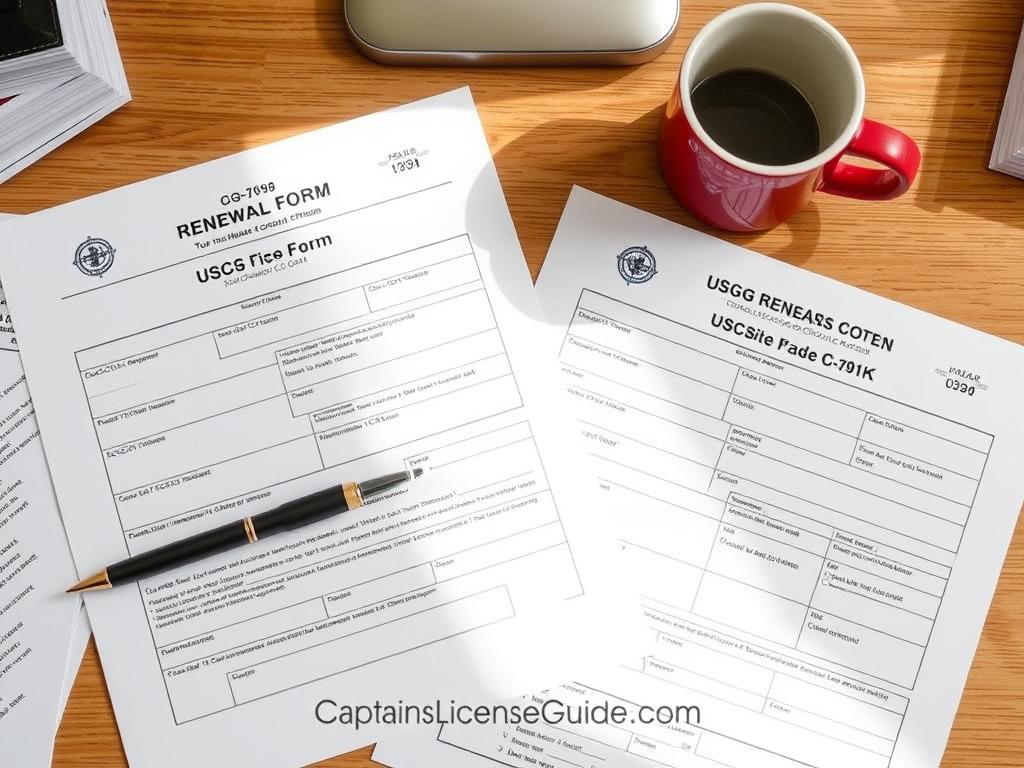
Four primary forms complete most renewal applications. Each serves a specific documentation purpose.
| Form Number | Form Name | Purpose |
| CG-719B | Master Application | Main renewal application – check “Officer Renewal” |
| CG-719K | Physical Examination | Current medical certificate from licensed physician/PA/NP |
| CG-719P | Drug Testing | DOT periodic test or random program enrollment proof |
| CG-719S | Sea Service | Documents 360 days for Path A renewal |
Submission Process
Pay renewal fees through Pay.gov before submitting documents. The confirmation receipt becomes part of your application packet.
Compile all completed forms into a single PDF. Email the complete package to your Regional Exam Center.
Louisiana mariners typically submit to the New Orleans REC. Processing takes four to eight weeks for complete applications.
Important: Incomplete applications return unprocessed. Double-check all signatures, dates, and required attachments before submission to avoid delays that could affect your fishing or charter boat career.
Renewal Deadline Approaching?
Our renewal specialists help Louisiana captains navigate the process efficiently. We review your documents before submission and ensure compliance with all USCG requirements.
Louisiana Specific Requirements
Your USCG license authorizes federal waters operation. Louisiana adds state-level requirements for commercial fishing and charter boat activities.
State Boating Safety Education
Louisiana requires boating education for certain operators. The NASBLA-approved Boating Safety Course satisfies this state requirement.
Born after January 1, 1984, you must complete boating education to operate any motorized vessel in Louisiana. This applies regardless of your USCG credentials.
The course covers Louisiana-specific boating regulations, water safety, and navigation rules. Online options provide flexible completion schedules.
Commercial Fishing and Charter Permits
Louisiana Department of Wildlife and Fisheries issues commercial licenses. These permits authorize fishing activities in state waters.
Charter Boat License
- Annual state permit required
- Covers passenger-for-hire fishing
- Separate from USCG credential
- Vessel-specific registration
- LDWF application process
Commercial Fishing Gear
- Gear licenses by type
- Species-specific permits
- Seasonal restrictions apply
- Reporting requirements
- Quota system participation
Guide Services
- Louisiana guide license
- Knowledge of state regulations
- Client safety standards
- Insurance recommendations
- Business registration needs
Charter boat licenses cost vary annually. Check current LDWF fee schedules before budgeting your operation expenses.
Commercial fishing licenses divide by gear type. Trawl, gill net, and other equipment each require specific permits.
Species-Specific Regulations
Louisiana manages fish and wildlife through detailed regulations. Size limits, bag limits, and seasonal closures protect marine resources.
Red snapper seasons change annually. Charter captains must track federal and state season announcements.
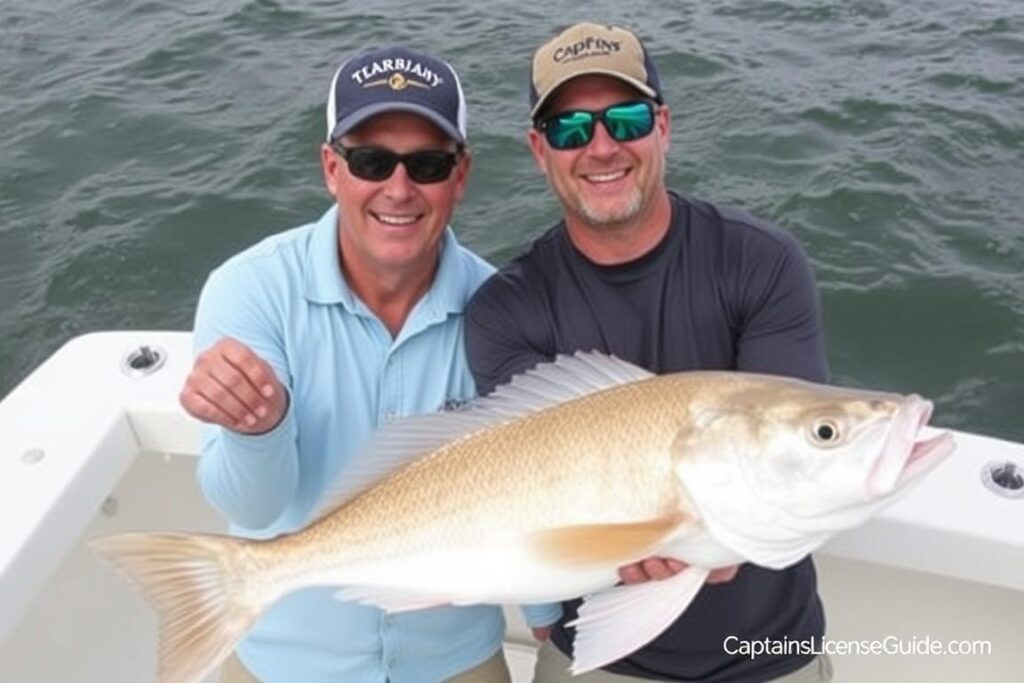
Speckled trout, redfish, and other popular species have specific rules. Your clients rely on your knowledge of current regulations.
What You Can Do With Each License Type
| Activity | USCG Only | USCG + State Charter | All Permits |
| Recreational vessel operation | Yes | Yes | Yes |
| Federal waters charter | Yes | Yes | Yes |
| Louisiana state waters charter | No | Yes | Yes |
| Commercial fishing (state waters) | No | No | Yes |
| Guide services (all waters) | Limited | Yes | Yes |
Most Louisiana charter captains need both USCG credentials and state charter boat licenses. This combination covers typical fishing charter operations.
Commercial fishing for sale requires additional permits beyond charter licenses. Separate your charter business from commercial fishing activities in your planning.
Insurance and Liability Considerations
Commercial vessel insurance protects your business and clients. Louisiana law does not mandate specific coverage, but practical considerations require it.
Passenger liability coverage shields you from injury claims. Equipment damage and vessel loss coverage protects your business assets.
Many marinas require proof of insurance before slip rental. Client contracts often include insurance verification clauses.
Pro Tip: Maintain digital copies of all licenses, permits, and insurance certificates on your phone. LDWF enforcement officers and USCG inspectors may request documentation on the water. Quick access prevents delays and demonstrates professionalism.
Career Opportunities and Training Resources
Louisiana offers diverse maritime career paths. Your captain license opens doors beyond traditional charter fishing.
Charter Boat and Fishing Guide Work
Louisiana charter fishing generates significant tourism revenue. Coastal communities from Venice to Grand Isle support thriving charter industries.
Inshore fishing guides target redfish, speckled trout, and other species in marsh waters. Offshore captains pursue tuna, marlin, and deep-water species.
Seasonal patterns affect booking rates. Spring and fall bring peak fishing conditions and client demand.
Commercial Vessel Operations
Oil and gas industry vessels need licensed captains. Crew boats, supply vessels, and support craft operate throughout Louisiana coastal waters.
Port operations employ captains for pilot services, tug operations, and vessel movements. These positions often provide steady year-round income.
Research vessels, environmental monitoring craft, and government boats hire qualified captains. Educational institutions and agencies maintain fleets.
Seasonal Charter Work
Peak earning months offset slower winter periods. Successful captains diversify income streams or plan for seasonal cash flow variations.
- High spring and fall demand
- Tournament season opportunities
- Flexible scheduling options
- Tips supplement base rates
Year-Round Maritime Careers
Industrial maritime work provides stable employment. Regular schedules and benefits packages attract captains seeking consistent income.
- Steady paycheck structure
- Health insurance benefits
- Retirement plan options
- Advancement opportunities
Training Schools and Resources
USCG-approved schools throughout Louisiana offer captain license training. New Orleans, Houma, and Lake Charles host established maritime education centers.
Online courses provide flexibility for working professionals. Hybrid programs combine distance learning with hands-on practical sessions.
Study materials include navigation rules, chart plotting, and weather interpretation. Exam preparation courses improve first-time pass rates.
Equipment and vessel familiarization happens through practical training. Time on the water builds confidence before your first charter.
Continuing education keeps your skills current. Advanced courses cover radar operation, electronic navigation, and vessel systems.
Getting Started With Your Captain’s License
Starting your captain license journey requires planning and commitment. Break the process into manageable steps.
Document your current sea service first. Gather vessel information and owner contact details for verification signatures.
Schedule your physical examination and drug screening. Complete these requirements early to avoid last-minute delays.
Research approved training schools and course schedules. Compare costs, formats, and student reviews before enrolling.
Budget for all expenses including course fees, exam costs, application fees, and initial permit purchases. Complete costs typically range from two thousand to four thousand dollars.
Louisiana waters offer exceptional opportunities for licensed captains. Your investment in proper training and credentials builds a foundation for long-term career success.
Ready to Start Your Captain’s License Process?
Our Louisiana-based licensing specialists guide you through every step from sea service documentation to final USCG approval. We offer personalized consultation, USCG-approved training courses, and ongoing renewal support. Over 500 Louisiana captains have earned their credentials through our programs.
Call our Louisiana office: