Maine’s maritime economy depends on properly credentialed captains who understand both USCG regulations and state-level permitting. Atlantic Captain Academy specializes in preparing Maine mariners for successful licensing outcomes.
Captain Greg Metcalf brings decades of instructional experience to candidates seeking their first OUPV credential or advancing to Master ratings. This resource clarifies every step of the licensing journey.
Federal USCG Captain’s License Types
The United States Coast Guard issues Merchant Mariner Credentials authorizing passenger vessel operations. Two primary credential types serve different operational needs and passenger capacities.
OUPV 6-Pack License Credential
The Operator of Uninspected Passenger Vessels credential permits carrying six passengers for hire. This license serves lobster tour operators, fishing guides, and small charter businesses throughout Maine waters.
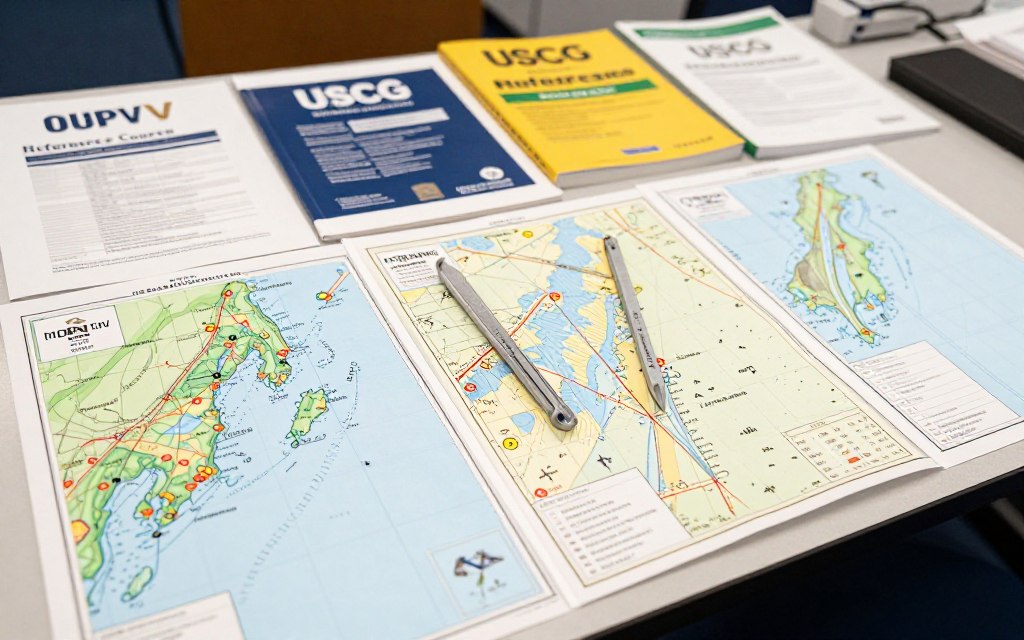
OUPV operational parameters:
- Six paying passengers maximum
- Vessels under 100 gross registered tons
- Near coastal routes extending 100 miles offshore
- Inland waterways including rivers and bays
Master 25, 50, and 100 Ton Ratings Upgrades
Master credentials authorize unlimited passenger operations on inspected vessels. The tonnage rating determines maximum vessel size under your command.
Master 25-ton licenses work for smaller commercial tour boats operating in Casco Bay and Penobscot Bay. Master 50-ton and 100-ton ratings expand employment prospects to larger ferry services and commercial vessels.
Master 25 Ton
- Vessels to 25 gross tons
- No passenger limits
- Coastal water operations
- Entry Master credential
Master 50/100 Ton
- Vessels to 50 or 100 gross tons
- Unlimited passenger capacity
- Extended operational zones
- Enhanced career opportunities
Eligibility Requirements for Captain Credentials
The Coast Guard mandates specific prerequisites before credential issuance. Captain Greg emphasizes thorough preparation to avoid application delays that cost time and money.
| Requirement | OUPV Credential | Master Credential |
| Minimum Age | 18 years | 19 years |
| Sea Service Days | 360 days total | 360 days total |
| Recency Requirement | 90 days within last 7 years | 90 days within last 7 years |
| Citizenship Status | U.S. Citizen or Permanent Resident | U.S. Citizen or Permanent Resident |
| TWIC Credential | Required | Required |
| Drug Screening | Required | Required |
| Physical Examination | Required (CG-719K) | Required (CG-719K) |
Sea Service Documentation
Sea service represents documented time operating vessels on water. Candidates need 360 total days with 90 days within the preceding seven years under current recency rules.
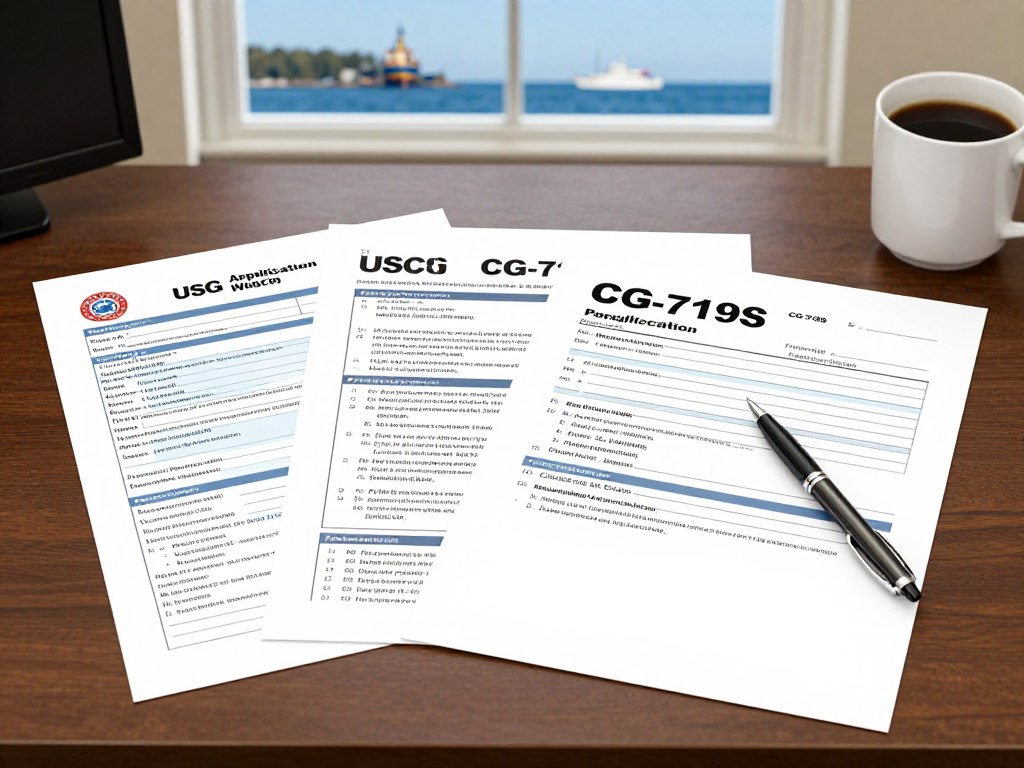
Record your experience using form CG-719S. Every entry requires vessel identification, operational dates, routes traveled, and verification signatures from vessel owners or licensed operators.
Days accumulate cumulatively across your boating history. A three-hour fishing trip counts as one day. Multi-day passages count each calendar date separately.
Transportation Worker Identification Credential
The TWIC provides maritime security clearance through Transportation Security Administration processing. Apply before starting your course to avoid delays during the licensing timeline.
TWIC credentials cost approximately $125 with five-year validity. Processing requires fingerprinting and background verification at approved TSA enrollment centers.
Begin Your Captain’s License Journey in Maine
Atlantic Captain Academy offers Coast Guard approved courses specifically designed for Maine mariners. Captain Greg Metcalf provides expert instruction with proven first-attempt pass rates.
License Upgrades and Career Advancement
Initial credentials open pathways toward advanced ratings and specialized endorsements. Understanding upgrade requirements helps Maine mariners plan long-term career progression in commercial maritime operations.
OUPV to Master Credential Upgrade
Transitioning from OUPV to Master requires documented sea service plus completion of an upgrade course. Captain Greg structures the Atlantic Captain Academy upgrade class to address specific knowledge gaps between credential levels.
The upgrade demands 360 days operating commercially as a licensed OUPV captain. Your documented experience must demonstrate passenger-carrying operations under your credential authority.
Master upgrade classes typically span four to six days. Course material covers vessel stability calculations, advanced navigation techniques, and regulatory compliance beyond OUPV scope.
Key Information: Most Maine charter captains upgrade to Master credentials within eighteen to twenty-four months after obtaining OUPV licenses. The expanded authority significantly increases seasonal earning potential.
Tonnage Rating Increases
Advancing your tonnage from 25 to 50 tons or 50 to 100 tons requires verified sea service on progressively larger vessels. No additional written examination applies for tonnage increases.
Each tonnage advancement needs 360 days operating vessels within your current license rating. Minimum 90 days must occur on vessels approaching your target tonnage threshold.
| Current Rating | Target Rating | Sea Service Required | Vessel Experience |
| Master 25 Ton | Master 50 Ton | 360 days on vessels to 25 tons | 90 days on 18-25 ton vessels |
| Master 50 Ton | Master 100 Ton | 360 days on vessels to 50 tons | 90 days on 40-50 ton vessels |
Sailing Endorsement
Sailing endorsements authorize commanding sailing vessels under power or sail. This credential benefits yacht delivery services, sailing charter operations, and sail training programs operating from Maine harbors.
Securing a sailing endorsement requires 360 documented sailing days. Coast Guard regulations define qualifying vessels as those with auxiliary engines where wind power provides primary propulsion.
No separate written test exists for sailing endorsements. Submit properly documented sailing experience on form CG-719S with your credential application to the Regional Exam Center.
Towing Endorsement
Towing endorsements permit commercial towing activities including harbor assistance, barge handling, and vessel rescue operations common in busy Maine ports.
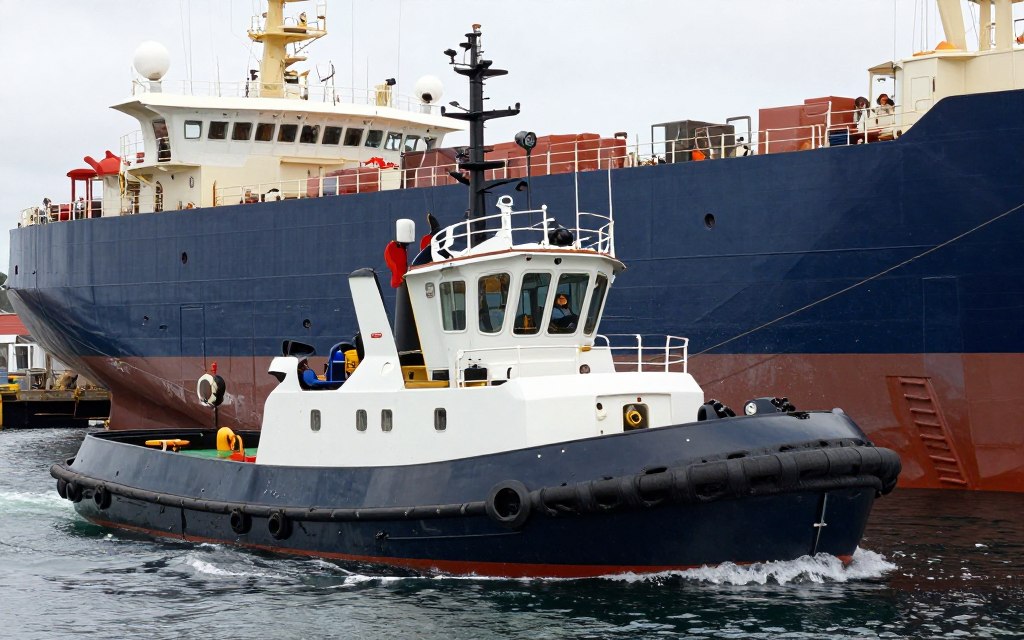
Towing endorsement requirements include:
- 30 documented days of towing operations on CG-719S
- Diverse towing experience including different vessel types
- Coast Guard approved towing endorsement course completion
- Passing score on specialized towing operations examination
OUPV to Master Upgrade Class
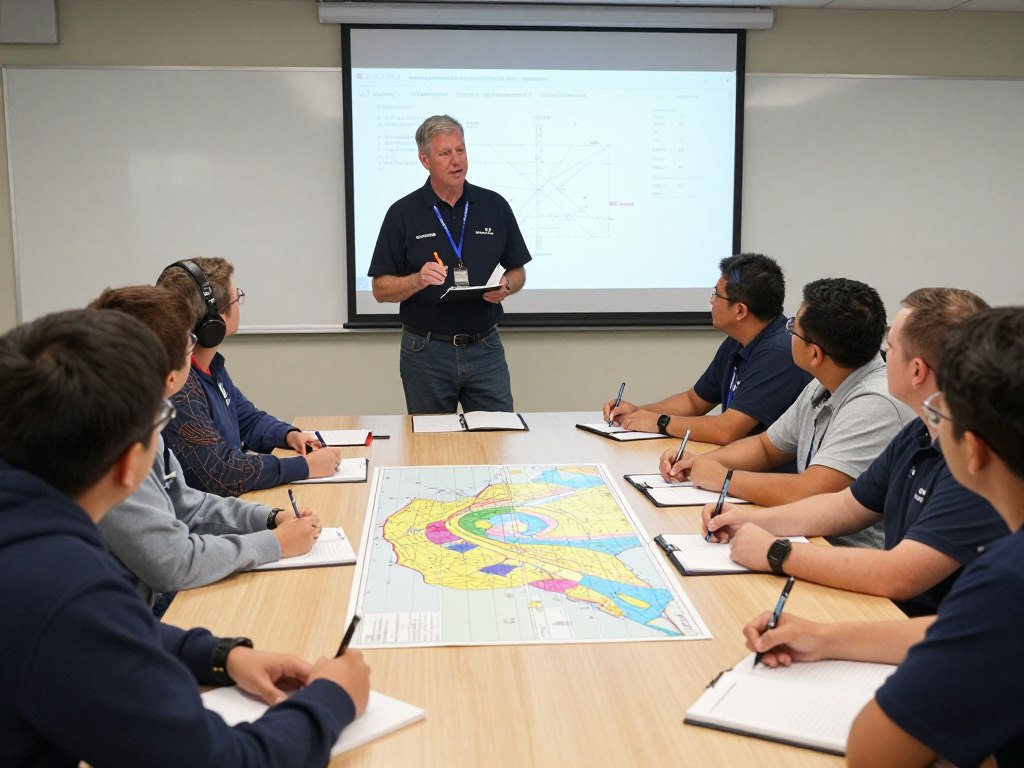
Advance to unlimited passenger operations through Atlantic Captain Academy’s Master upgrade class. Captain Greg covers advanced topics and prepares candidates for examination success.
- Four to six day intensive instruction
- Advanced navigation and vessel stability
- Comprehensive exam preparation
- Instructor support through testing
Tonnage Increase Documentation
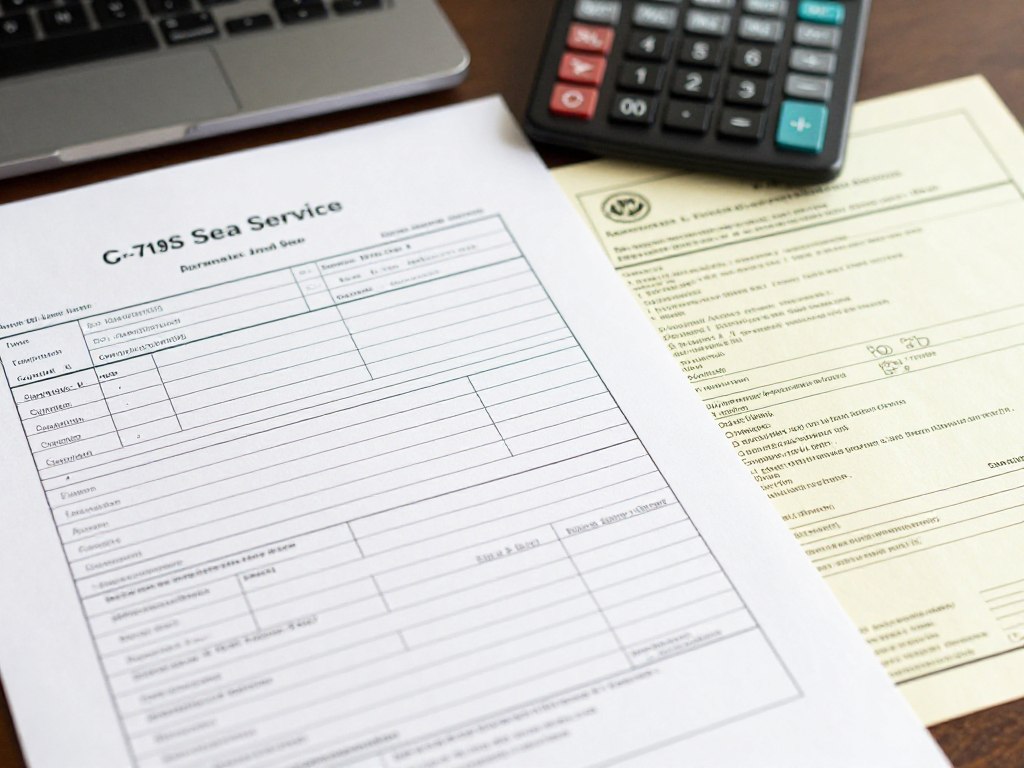
Expand operational capability to larger commercial vessels. Atlantic Captain Academy assists with proper sea service documentation and application preparation for tonnage increases.
- 25 to 50 ton advancement
- 50 to 100 ton advancement
- Complete documentation review
- Application submission guidance
Sailing and Towing Endorsements
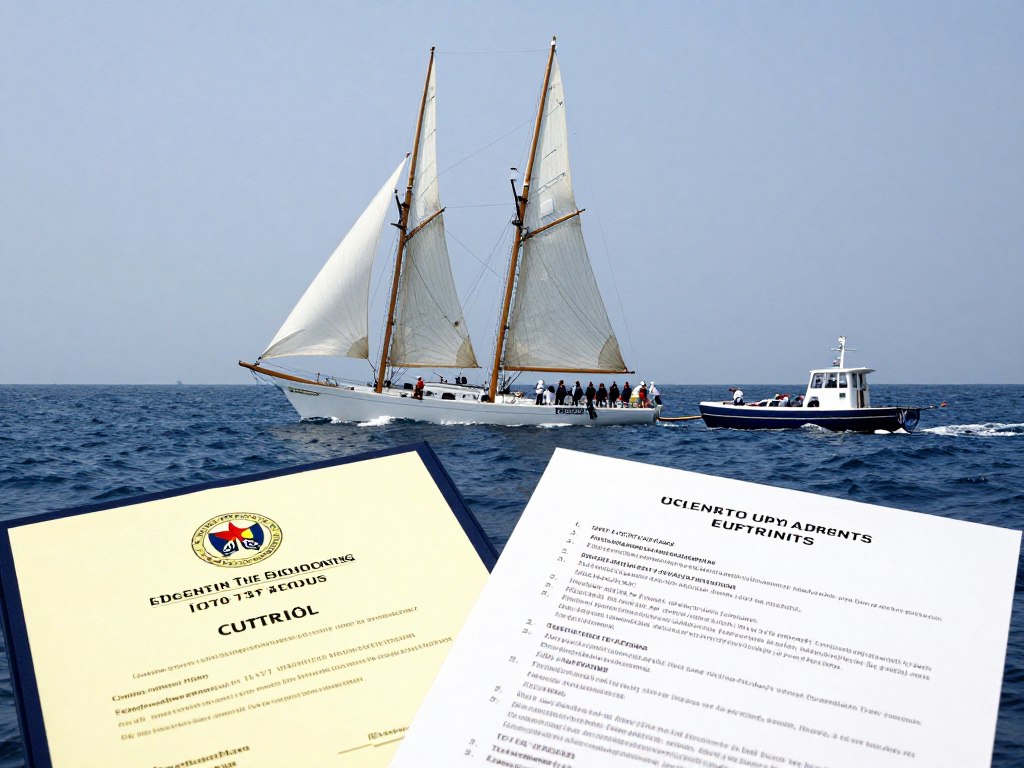
Enhance your credential with specialized endorsements. Captain Greg Metcalf provides targeted instruction for sailing and towing authorizations that increase your professional value.
- Sailing endorsement classes
- Towing operations training
- Experience verification assistance
- Specialized examination prep
The Renewal Process
Coast Guard credentials expire after five years. The renewal process maintains credential validity without repeating original examination requirements.
Two Renewal Pathways
The Coast Guard provides two distinct routes for credential renewal. Select the appropriate path based on your recent operational activity and documented sea service.
Path A: Sea Service Documentation
Document 360 days of sea service occurring within the preceding five years. This method suits actively employed captains maintaining regular commercial operations.
Experience must be recorded on form CG-719S with complete vessel details and proper verification signatures. Each entry demands accurate dates and operational information.
The 360-day total can combine various licensed operations. Part-time charter work, seasonal tour operations, and delivery services all contribute toward your required total.
Path B: Course or Take-Home Examination
Complete a Coast Guard approved renewal course if insufficient sea service exists. This option serves inactive licenses or captains with limited recent operational time.
Renewal courses at Atlantic Captain Academy span one to two days. Captain Greg reviews navigation rules, safety procedures, and regulatory updates implemented during the past five years.
Alternatively, request an open-book examination from your Regional Exam Center. This take-home test covers identical material as renewal courses offer.
Critical Information: The one-year grace period permits renewal within twelve months following expiration without retaking your original course. Operating on an expired credential remains illegal, but the grace period preserves renewal eligibility.
Required Renewal Documentation
Comprehensive documentation prevents processing delays and application rejections. Gather all required forms before submitting your renewal package to the Regional Exam Center.
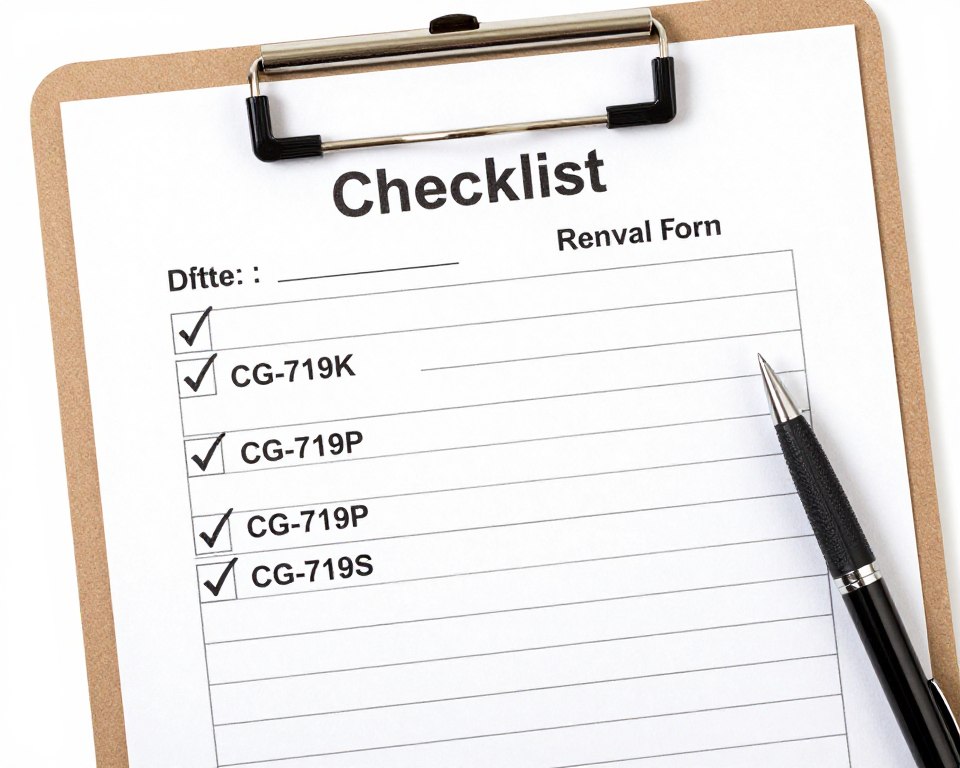
CG-719B Master Application
The Master Application serves as your primary renewal document. Mark the “Officer Renewal” checkbox in the application type section.
Complete every section with accurate information. Include current license number, personal details, and the specific credential being renewed. Sign and date before submission.
CG-719K Physical Examination
Current medical certification from a physician, physician assistant, or nurse practitioner is mandatory. The examination must occur within twelve months preceding your application submission.
Coast Guard form CG-719K specifies exact examination requirements. Vision acuity, hearing function, cardiovascular condition, and general physical health receive assessment.
Certain medical conditions demand additional documentation or specialist evaluations. Discuss health concerns with your examining healthcare provider during the appointment.
CG-719P Drug Testing Documentation
Provide proof of enrollment in a DOT-compliant random drug testing program or complete a pre-employment drug screening. Testing must occur within six months of application submission.
Random testing programs require employer or consortium documentation. The program must meet Department of Transportation and Coast Guard standards for maritime workers.
CG-719S Sea Service Documentation
Document your 360 service days on form CG-719S when using Path A renewal. Each vessel demands a separate entry with comprehensive operational details.
Essential information includes:
- Vessel name and official documentation number
- Gross tonnage and propulsion system type
- Operational routes and waters navigated
- Service dates and cumulative days aboard
- Position held and specific duties performed
- Verification signature from vessel owner or licensed captain
Application Submission
Pay renewal fees through Pay.gov before submitting application materials. The Coast Guard no longer accepts payment accompanying mailed applications.
Compile all documentation into one PDF file. Email your complete package to the appropriate Regional Exam Center. Maine mariners submit to Boston or Portland REC depending on location.
Processing requires four to eight weeks typically. The Coast Guard issues a receipt confirming application acceptance. Your renewed credential arrives by mail following approval.
Important Deadline: Initiate renewal procedures at minimum 90 days before credential expiration. This buffer prevents operational authority lapses while Coast Guard personnel process your application.
Maine State Specific Captains License Requirements
Commercial vessel operations in Maine demand coordination between federal Coast Guard credentials and state-issued permits. Understanding both regulatory systems ensures complete legal compliance.
State Boating Safety Education
Maine does not mandate a separate NASBLA boating safety certificate for Coast Guard licensed captains. Your federal captain license fulfills Maine’s boating education requirements.
Recreational boaters born after January 1, 1996, must complete Maine Department of Inland Fisheries and Wildlife approved boater education. This requirement does not apply to federally licensed mariners.
Commercial Fishing Guide License
Maine requires a distinct Recreational Fishing Guide License for anyone providing guided fishing services for compensation. Your Coast Guard captain license does not substitute for this state mandate.
The Maine Department of Inland Fisheries and Wildlife issues recreational fishing guide licenses. Requirements include:
- Valid Maine business license registration
- Completed guide license application with fees
- Trip logbook reporting commitment
- Annual license fee payment to state
- Proof of commercial liability insurance coverage
Recreational fishing guide licenses expire December 31 each year. Renewal demands submitting previous year’s logbook records and paying annual fees.
Charter Vessel Registration
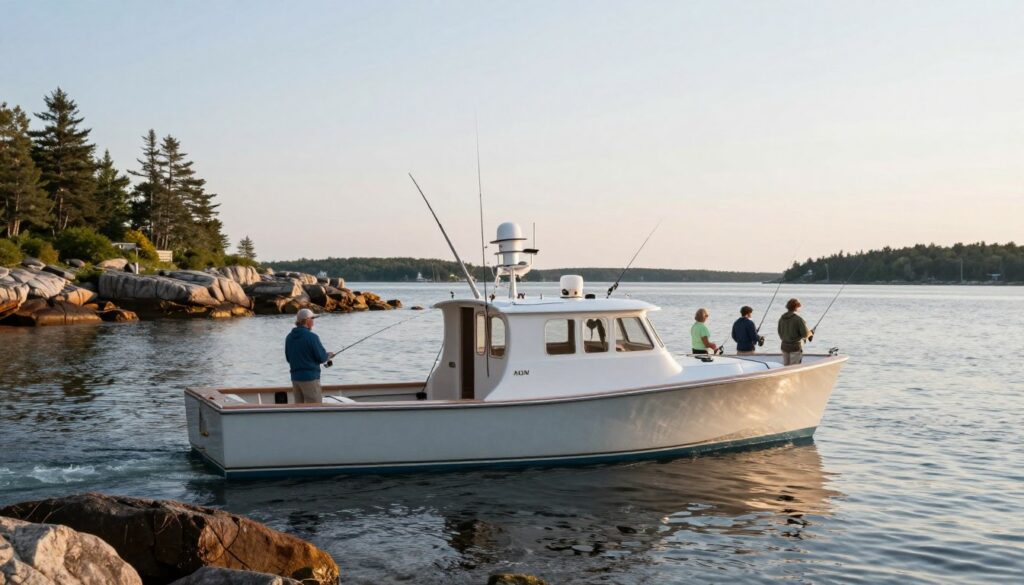
Vessels conducting charter fishing operations in Maine waters need proper state registration. This permit authorizes the vessel for commercial passenger operations under state jurisdiction.
Charter vessel registration costs approximately $75 annually. Apply through Maine Department of Marine Resources with vessel documentation and insurance verification.
Additional Maine Permits
Specific commercial operations may demand additional state-level permits beyond basic federal credentials:
| Operation Type | Required Permit | Issuing Agency |
| Wildlife Viewing Tours | Commercial Use Authorization | Maine Bureau of Parks and Lands |
| Acadia National Park Waters | Commercial Operating Permit | National Park Service |
| Shellfish Harvesting | Commercial Shellfish License | Maine Dept of Marine Resources |
| Water Transportation Service | Business License | Maine Revenue Services |
Operational Authority Comparison
Understanding distinctions between Coast Guard and Maine state requirements clarifies your complete legal operating authority across different commercial activities.
Coast Guard License Only
Federal captain credentials authorize:
- Passenger vessel operations for hire
- Transporting passengers in federal waters
- Water taxi and harbor shuttle services
- Sightseeing and lighthouse tours
- Vessel delivery and repositioning
Coast Guard Plus Maine Permits
Combined federal and state licensing permits:
- Recreational fishing charter operations
- Guided hunting and fishing excursions
- Combination tour and fishing trips
- Complete charter business operations
- Activities in state-managed waters
Compliance Best Practices
Maintain copies of all licenses and permits aboard your vessel during operations. Maine Marine Patrol officers and Coast Guard boarding teams may request documentation verification.
Track renewal dates for both federal credentials and state permits separately. Create calendar reminders 90 days before each expiration to initiate renewal procedures.
Keep current insurance certificates matching your license requirements. Most Maine marinas and charter booking platforms verify insurance coverage before allowing operations.
Need Maine-Specific Licensing Guidance?
Atlantic Captain Academy specializes in helping Maine mariners navigate federal Coast Guard requirements and state permitting complexities. Captain Greg Metcalf provides expert advice on your complete licensing package.
Captains License in Maine FAQs
How long does getting a captain license in Maine take?
The complete timeline spans two to five months from course enrollment to credential receipt. Course completion at Atlantic Captain Academy requires one to two weeks for classroom instruction or two to four months for online study pace. Following examination passage, Coast Guard processing takes four to eight weeks. Factor additional time for TWIC card acquisition and medical examination completion.
Can I operate in other states with my Coast Guard license?
Yes, Coast Guard captain credentials provide nationwide authority across all United States territorial waters. Your federal license authorizes passenger vessel operations anywhere within U.S. jurisdiction. However, individual states impose specific permits for activities like fishing guides or operations in state-controlled waters. Each state maintains different requirements beyond federal credentials.
What happens when my license expires?
Operating as a licensed captain with an expired credential is illegal. The Coast Guard provides a one-year grace period for renewal purposes. During this twelve-month window, you can renew through standard procedures without retaking your original course. After one year passes, you must complete a new license course and pass examinations to restore your credential.
Do I need sea service for my first captain license?
Yes, the Coast Guard mandates 360 days of documented sea service before issuing any captain credential. This experience must include minimum 90 days within the preceding seven years under current recency requirements. Sea service can derive from recreational or commercial boating, but requires proper documentation on form CG-719S with signatures from vessel owners or licensed captains verifying your time.
What distinguishes inland from near coastal licenses?
Inland credentials authorize operations on rivers, lakes, and protected bays where vessels maintain constant visual contact with shorelines. Near coastal licenses permit operations extending 100 miles offshore on ocean waters. Most Maine captains obtain near coastal endorsements to access offshore fishing grounds and coastal routes between harbors. The examination includes additional navigation and weather topics for near coastal credentials.
What does getting a captain license in Maine cost?
Total first-time expenses range from $1,600 to $2,700 for OUPV credentials. This includes course tuition at Atlantic Captain Academy ($900-$1,600), Coast Guard application fee ($140), TWIC card ($125), physical examination ($80-$150), drug screening ($50-$100), and miscellaneous expenses. Master credentials cost $2,100 to $3,400 total. Maine-specific permits add $300-$700 annually for charter fishing operations.
Next Steps for Your Captain License
Securing your captain license in Maine requires meeting rigorous Coast Guard standards and understanding state regulations. The process demands commitment and proper guidance, but creates professional opportunities throughout Maine’s thriving maritime industry.
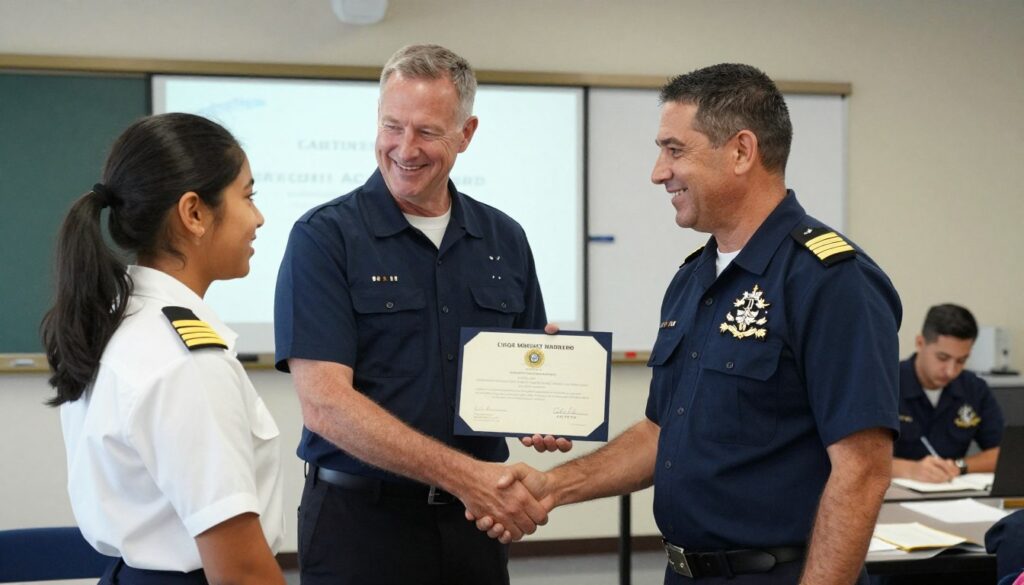
Begin by documenting your sea service history and assembling required forms. Complete a Coast Guard approved course at Atlantic Captain Academy matching your target credential type. Pass examinations at the Regional Exam Center and submit your complete application package.
Remember the one-year grace period for renewals and maintain current credentials. Maine’s maritime industry rewards prepared professionals who sustain valid credentials and proper state permits.
Your captain license represents professional credibility and legal authority commanding passenger vessels. Whether pursuing lobster boat charters, tour operations, or commercial marine services, proper licensing establishes the foundation of your maritime career.
Take Your Next Step Toward a Captain’s License
Join countless Maine mariners who successfully obtained Coast Guard credentials through Atlantic Captain Academy’s comprehensive program. Captain Greg Metcalf provides everything needed from initial application through examination and beyond.
Questions or comments or guidance Contact us