Nebraska’s waterways create opportunities for commercial vessel operations. The Missouri River, Lake McConaughey, and numerous reservoirs support fishing charters, tour operations, and water sports businesses.
Federal credentials from the U.S. Coast Guard authorize these commercial activities. This guide covers Nebraska captains license requirements, federal processes, state regulations, and career pathways for 2026.
Federal USCG Captain’s License Types
The U.S. Coast Guard issues all commercial captain credentials through the National Maritime Center. Nebraska operators must obtain federal licensing before conducting paid passenger operations.
OUPV 6-Pack License in Nebraska
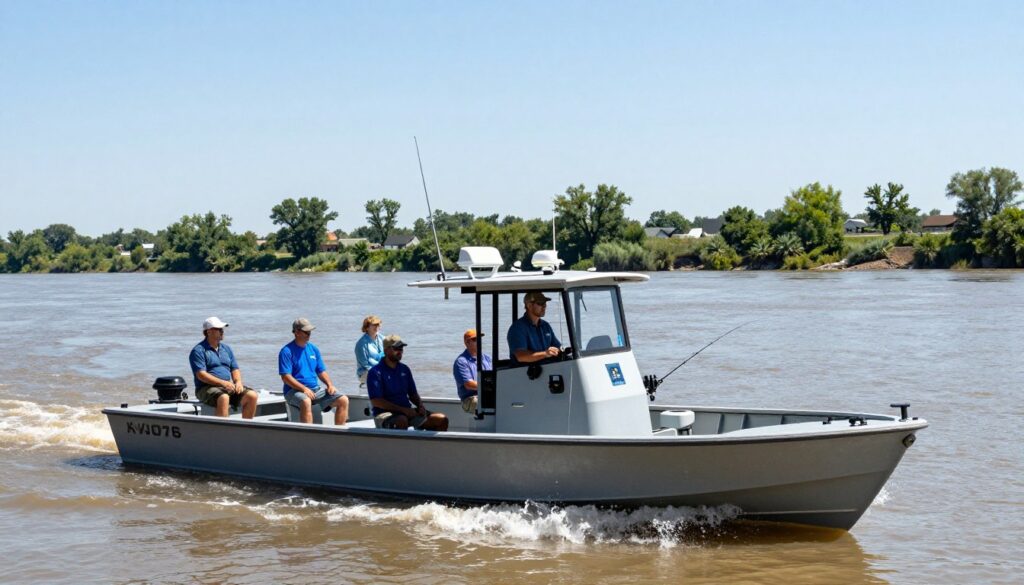
The Operator of Uninspected Passenger Vessels credential authorizes carrying up to six paying passengers. This boat captains license in Nebraska suits fishing guides, small tour operators, and water sports instructors.
| License Type | Passenger Limit | Vessel Size | Nebraska Uses |
| OUPV 6-Pack | Six paying passengers maximum | Under 100 gross tons | Fishing charters, water skiing instruction |
| Master 25 Ton | Unlimited passengers | Up to 25 gross tons | Tour boats, larger fishing operations |
| Master 50 Ton | Unlimited passengers | Up to 50 gross tons | Commercial tour vessels |
| Master 100 Ton | Unlimited passengers | Up to 100 gross tons | Large commercial operations |
Master License Overview
Master credentials remove passenger restrictions. Vessel capacity certification determines how many passengers you carry. Tonnage ratings define the largest vessel you can operate.
Gross Tonnage Explained
Gross tonnage measures internal vessel volume, not weight. Federal formulas calculate this measurement. Most vessels under 50 feet measure below 25 gross tons.
Basic Eligibility Standards
Age Requirements
- OUPV: Minimum 18 years old
- Master: Minimum 19 years old
- Sea service counts from age 16
- Age verified during application
Citizenship Documentation
- U.S. passport (preferred)
- Birth certificate plus photo ID
- Naturalization certificate
- Green card for permanent residents
Sea Service Requirements
Document 360 days operating vessels. At least 90 days must fall within the past seven years before application.
Note: Four hours of vessel operation equals one day of sea service. Multiple four-hour periods on the same date count as only one day.
TWIC Card
Transportation Worker Identification Credential applies only to specific secure facilities. Most OUPV operations don’t require TWIC. Only certain restricted port access requires this credential.
Start Your Nebraska Captain’s License Journey
Access official USCG resources and approved training programs for Nebraska mariners beginning the licensing process.
Advancing Your Captain License
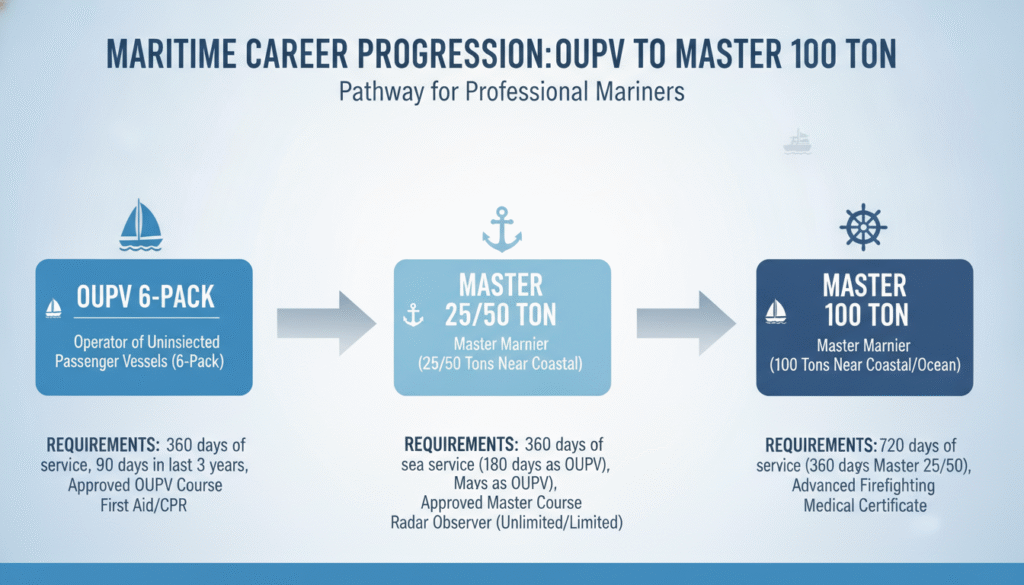
Most Nebraska mariners start with OUPV credentials and advance as business grows. Understanding upgrade paths supports professional development.
OUPV to Master Upgrade
Upgrading from OUPV to Master requires additional sea time and specialized training. The upgrade course covers commercial operations beyond six passengers.
Upgrade Requirements
- Maintain current OUPV credential in good standing
- Document additional 360 days sea service beyond original requirement
- Verify 90 days occurred within recent seven years
- Complete USCG-approved Master upgrade course
- Pass Master examination at Regional Exam Center
- Submit upgrade application with fees
Increasing Tonnage Ratings
Higher tonnage ratings require documented experience on larger vessels. Each increase demands verified time commanding vessels within the target tonnage range.
| Current License | Upgrade To | Required Experience | Additional Training |
| Master 25 Ton | Master 50 Ton | 180 days on vessels 26-50 tons | Coursework and examination |
| Master 50 Ton | Master 100 Ton | 180 days on vessels 51-100 tons | Advanced navigation training |
Sailing Endorsement
Sailing endorsements authorize commercial sailing vessel operations. Requirements include specialized training in sail handling, weather interpretation, and emergency sail procedures.
Sailing Endorsement Requirements
- Active OUPV or Master credential
- Documented sailing vessel experience
- USCG-approved sailing course
- Sailing endorsement examination
Towing Endorsement
Towing endorsements permit commercial towing or pushing operations. Essential for salvage work and certain commercial activities.
Towing Endorsement Requirements
- Active Master credential (not available for OUPV)
- Minimum 30 days documented towing experience
- 90 days towing within past five years
- Specialized towing operations training
- Towing endorsement examination
Five-Year Renewal Process
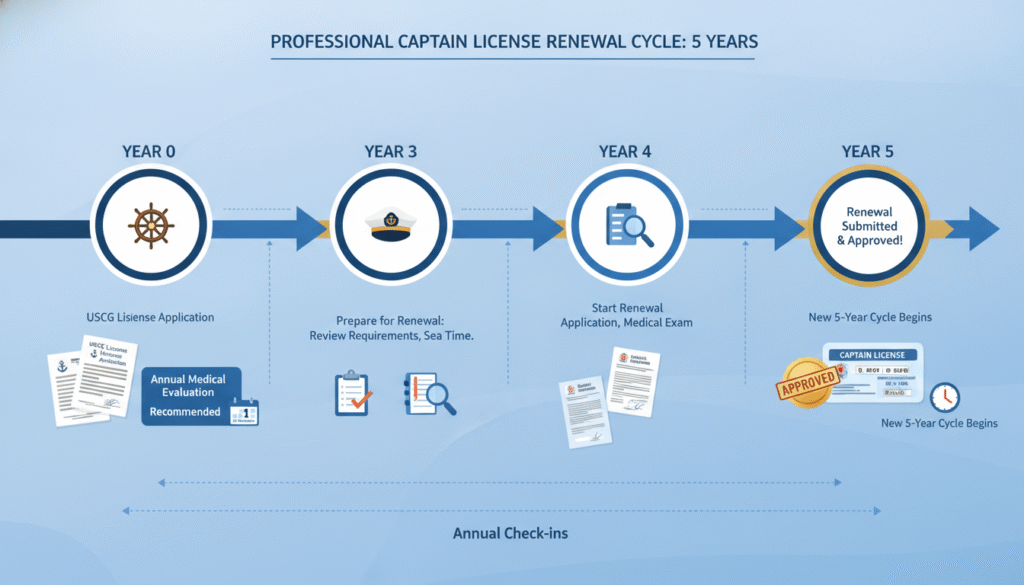
USCG captain credentials expire after five years. Renewal requires documentation submission within specific timeframes.
Two Renewal Paths
The Coast Guard offers two renewal methods. Your choice depends on operational activity during the credential period.
Path A: Sea Service Renewal
Active captains with regular operations document 360 days service within five years. This proves continued operational competency.
Calculation: Four operating hours equal one sea service day. Multiple four-hour periods on one calendar date count as only one day total.
Sea Service Documentation Steps
- Maintain detailed logbooks throughout five-year period
- Record date, vessel information, hours, routes for each trip
- Obtain vessel owner verification on Form CG-719S
- Compile documentation and submit with renewal application
Path B: Course or Examination Renewal
Captains without 360 service days renew through approved education. This maintains credentials despite reduced commercial activity.
Renewal Course Option
- USCG-approved training (8-16 hours)
- Updated regulations and safety
- Online or classroom formats
- Completion certificate issued
Open Book Exam Option
- Take-home regulation examination
- Available from Regional Exam Center
- 90% minimum passing score
- Cost-effective alternative
One-Year Grace Period
Credentials expire on printed dates. Operating commercially with expired credentials violates federal law. A one-year grace period allows renewal without retaking original courses.
Important: Begin renewal 90 days before expiration. Missing the one-year grace period requires complete relicensing from the beginning.
Required Renewal Forms
Complete documentation prevents processing delays. Gather all materials before starting renewal.
Form CG-719B: Renewal Application
Primary renewal form. Select “Officer Renewal” category. Provide current credential number and personal information matching existing license exactly.
Form CG-719K: Medical Certificate
Licensed physician, physician assistant, or nurse practitioner conducts examination. Covers vision, hearing, cardiovascular health, and fitness for duty.
- Valid one year from examination date
- Vision correctable to 20/40 minimum
- Adequate color vision required
- No disqualifying medical conditions
Form CG-719P: Drug Testing Documentation
Evidence of random drug testing program enrollment or recent test results. Nebraska captains have several options:
- Employer confirmation letter
- DOT compliance required
- Standard for employed captains
- Employer maintains records
Employer Program
- Commercial testing consortium enrollment
- Annual fees $150-300
- Required for independent operators
- Enrollment certificate provided
Consortium Membership
- DOT-approved test within 185 days
- Negative results with application
- Temporary solution only
- Needed each renewal
Individual Test
Form CG-719S: Sea Service Form
Required only for Path A renewals documenting 360 service days. Vessel owners verify service with signature and contact information.
Application Submission
Regional Exam Centers process renewals. Follow this sequence:
- Complete all required forms (CG-719B, K, P, and S if applicable)
- Pay renewal fee via Pay.gov (approximately $140 for 2026)
- Compile documents into single PDF file
- Email PDF to appropriate Regional Exam Center
- Include payment confirmation
- Expect 30-60 day processing time
Access Renewal Resources
Find USCG-approved renewal courses and examination resources for Nebraska mariners maintaining captain credentials.
Nebraska-Specific Requirements
Federal USCG credentials establish baseline authority. Nebraska adds state regulations for vessel operations and commercial activities.
Nebraska Boating Safety Education
Nebraska requires boating safety education for operators born after December 31, 1985. Your USCG captain’s license typically satisfies this requirement for commercial operations.
Boater Education Card
Nebraska law mandates boating education certification for specific age groups. Federal captain’s credentials usually exempt you during commercial operations.
USCG Exemption: Valid USCG captain credentials typically fulfill Nebraska boater education requirements for commercial operations. Carry both credentials on Nebraska waters.
Obtaining Nebraska Boater Education
If additional certification needed for personal operation:
- Nebraska Game and Parks Commission approved courses
- Online options through recognized providers
- Classroom instruction available statewide
- Lifetime certification with no expiration
Commercial Fishing Guide Operations
Operating fishing charters in Nebraska may require additional permits depending on activities and locations. Nebraska Game and Parks Commission regulates commercial guide services.
Nebraska Guide Permits
General Requirements
- Valid USCG captain credential
- Nebraska fishing license
- Liability insurance documentation
- Business registration
Location-Specific
- Nebraska vessel registration
- Waterway-specific permits
- Charter endorsement
- Additional insurance requirements
Nebraska Waters for Commercial Use
Commercial operations authorized on:
- Lake McConaughey
- Lewis and Clark Lake
- Harlan County Reservoir
- Missouri River sections
- Lake Ogallala
- Branched Oak Lake
Vessel Registration Requirements
Commercial vessels operating in Nebraska must display proper registration. State registration serves distinct purposes from federal documentation.
State versus Federal Documentation
| Registration Type | Vessel Size | Display Method | Renewal Period |
| Nebraska State Registration | Under 5 net tons | Numbers on bow, decal on port | Annual renewal |
| USCG Documentation | 5 net tons and larger | Official number on interior structure | Annual renewal |
| Commercial Endorsement | All for-hire vessels | Documentation indicates commercial use | With vessel documentation |
Nebraska Commercial Vessel Safety Equipment
Passenger-carrying vessels require Nebraska safety equipment meeting or exceeding federal minimums.
Mandatory Safety Equipment
- USCG-approved life jackets for all persons
- Type IV throwable flotation device
- Fire extinguisher appropriate for vessel size
- Sound signaling device (horn or whistle)
- Operational navigation lights
- First aid kit for commercial operations
USCG License vs Nebraska Endorsements
Understanding credential and permit requirements prevents violations. Here’s what credentials authorize for Nebraska operations:
| Operation Type | USCG Credential | Nebraska Permits | Insurance |
| Lake Fishing Charter (1-6 passengers) | OUPV 6-Pack | Fishing license, possible guide permit | Commercial liability recommended |
| River Tour (7+ passengers) | Master 25/50/100 Ton | Vessel registration only | Vessel requires USCG inspection |
| Water Sports Instruction | OUPV or Master | Business license | Liability insurance essential |
| Private Event Charter | OUPV or Master | Vessel registration | Commercial coverage required |
Nebraska Game and Parks Commission
Commercial permits, vessel registration, and Nebraska waterway regulations information.
Captain’s License Training for Nebraska Residents

Nebraska residents access multiple USCG-approved training formats for captain’s license preparation. Selection depends on schedule, learning style, and budget.
Regional Classroom Training
Traditional classroom instruction delivers hands-on training and direct instructor access. Regional schools near Nebraska offer OUPV and Master courses year-round.
Midwest Regional Centers
- Complete OUPV course: 6-8 days intensive
- Weekend and weekday schedules
- Instructors with regional expertise
- Typical cost: $900-1,400
Inland Waters Training
- Inland and near coastal endorsements
- Master license training available
- Sailing endorsement courses
- Typical cost: $1,000-1,500
Online USCG-Approved Courses
Online courses provide flexibility for working professionals. USCG approves specific providers. Students complete coursework independently, then attend proctored examinations.
Online Course Structure
- Enroll in USCG-approved online program
- Complete navigation, rules, safety modules independently
- Study requires approximately 40-80 hours total
- Schedule proctored exam at approved location
- Pass proctored examination for certificate
- Submit certificate with USCG application
Proctored Testing: Approved testing locations exist throughout Nebraska and nearby states. Online providers coordinate testing after coursework completion.
Hybrid Training Programs
Some providers combine online coursework with brief in-person sessions. This reduces classroom time while maintaining hands-on instruction.
Typical Hybrid Format
- Complete 70-80% training online at own pace
- Attend 2-3 day in-person practical training
- Hands-on navigation exercises
- Final examination administered in person
- Total cost often $100-200 less than classroom
Training Format Selection
Classroom Training Benefits
- Hands-on learning with direct instruction
- Immediate question responses from instructors
- Structured environment improves focus
- Intensive one-week completion possible
Online Training Benefits
- Flexible scheduling fits work schedules
- Self-paced learning for independent learners
- Budget-friendly ($200-400 savings typical)
- No travel to distant training centers
Verifying Course Accreditation
Only USCG-approved courses satisfy federal requirements. Verify accreditation before enrollment.
Accreditation Verification Steps
- Request provider’s USCG approval number
- Verify course on National Maritime Center list
- Confirm course covers your credential type
- Verify current approval status
- Review recent student testimonials
Find USCG-Approved Training
Search classroom, online, and hybrid captain’s license training accessible to Nebraska residents. Compare formats and pricing.
USCG Testing and Application
After completing approved courses, candidates test at Regional Exam Centers. Understanding examination format and application procedures improves success rates.
Captain’s License Examination Format
Examinations test knowledge essential for safe commercial operations. Format varies between OUPV and Master exams.
OUPV Examination Subjects
| Subject Area | Questions | Passing Score | Content |
| Navigation General | 50 questions | 70% required | Chart plotting, position fixing, navigation aids |
| Deck General | 50 questions | 70% required | Safety equipment, emergencies, vessel operations |
| Rules of the Road | 40 questions | 90% required | Navigation rules, lights, sound signals, right-of-way |
Rules Critical: This section requires 90% passage. Navigation rules knowledge must be comprehensive. Most examination failures occur here.
Master Examination Differences
Master examinations include additional questions on stability, advanced navigation, and commercial operations.
- Stability and trim calculations
- Advanced navigation problems
- Commercial regulation compliance
- Crew supervision principles
- Total questions approximately 200
Scheduling Regional Exam Center Test
Nebraska applicants test at nearest Regional Exam Center. Schedule examination after completing coursework and gathering documentation.
Examination Scheduling Steps
- Complete USCG-approved captain’s license course
- Gather all required application documentation
- Contact REC to schedule test appointment
- Arrive 30 minutes early on test date
- Bring government photo ID and materials
- Complete examination (typically 4-6 hours)
Complete Application Documentation
Missing documentation causes delays or rejection. Assemble everything before scheduled examination.
Identity Documents
- U.S. passport or birth certificate with photo ID
- Social Security card or documentation
- Two recent passport photos (2×2 inches)
- Driver’s license or government ID
Training Certificates
- USCG-approved course certificate
- Valid CPR certification
- Current First Aid certification
- Drug testing enrollment or test results
Sea Service Verification
- Completed Form CG-719S
- Vessel owner signatures and contacts
- Logbook entries as supporting evidence
- Owner letters verifying periods
Medical and Testing
- Form CG-719K from medical provider
- Form CG-719P drug testing documentation
- Vision and hearing test results
- Medical waivers if applicable
Application Fees and Payment
USCG charges processing fees for credentials. Payment through Pay.gov before or during REC appointment.
| Service Type | 2026 Fee | Payment Method | Processing Time |
| OUPV Original Issue | $140 | Pay.gov online | 30-60 days |
| Master Original Issue | $140 | Pay.gov online | 30-60 days |
| Credential Renewal | $140 | Pay.gov online | 30-60 days |
| Endorsement Addition | $55 | Pay.gov online | 15-30 days |
Post-Examination Processing
Examination passage doesn’t mean immediate credential receipt. USCG processes complete applications before issuing credentials.
Processing Timeline
- REC reviews examination results (immediate pass/fail)
- Complete application enters processing queue
- Background verification and document review
- Processing typically requires 30-60 days
- Credential arrives via certified mail
- License valid five years from issue date
Career Opportunities for Nebraska Captains
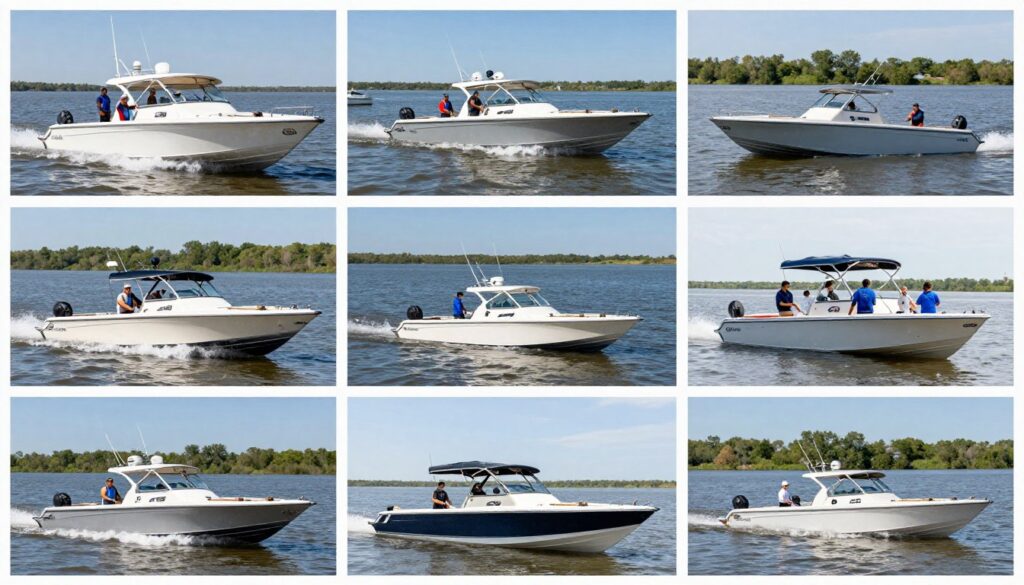
Captain credentials in Nebraska unlock diverse career paths. Understanding the market helps target opportunities and maximize income.
Nebraska Lake Charter Fishing
Nebraska lakes support active charter fishing operations. Lake McConaughey, Lewis and Clark Lake, and other reservoirs offer excellent walleye, bass, and catfish fishing attracting anglers regionally.
Lake Charter Income Potential
| Experience Level | Daily Rate | Annual Trips | Estimated Income |
| New Captain (Year 1-2) | $300-$450 | 30-60 trips | $9,000-$27,000 |
| Established Captain (Year 3-5) | $450-$650 | 70-100 trips | $31,500-$65,000 |
| Premium Captain (5+ years) | $650-$900 | 100-150 trips | $65,000-$135,000 |
Lake Tour Operations
Nebraska’s scenic lakes attract tourists seasonally. Tour operations and specialty excursions provide employment for credentialed captains.
Tour Vessel Opportunities
- Lake McConaughey scenic tours
- Lewis and Clark Lake wildlife cruises
- Harlan County Reservoir sightseeing
- Missouri River historical tours
- Special event charters (weddings, corporate events)
Seasonal versus Year-Round Employment
Nebraska’s climate creates distinct operating seasons. Planning for income fluctuations ensures financial stability.
| Operation Type | Peak Season | Off-Season Options | Year-Round Potential |
| Lake Charters | April-October | Equipment maintenance, ice fishing | Primarily seasonal |
| Tour Operations | May-September | Special events, winter cruises | Limited winter demand |
| Water Sports | June-August | Maintenance, alternative employment | Highly seasonal |
Your Path to Nebraska Captain Credentials
You now understand Nebraska captains license requirements from eligibility through careers. Taking action transforms knowledge into credentials.
Immediate Action Steps
- Calculate sea service – document your vessel operation days
- Select credential type matching your career goals
- Research USCG-approved courses accessible from Nebraska
- Complete medical examination with licensed provider
- Establish drug testing enrollment
- Compile citizenship and identity documents
Complete Cost Estimate
Budget accurately for complete licensing investment. Costs vary based on training format.
| Expense Category | Low Estimate | High Estimate | Notes |
| USCG Approved Course | $650 | $1,500 | Online less expensive than classroom |
| Medical Examination | $75 | $225 | Varies by provider |
| Drug Testing Consortium | $150 | $300 | Annual enrollment |
| CPR/First Aid | $50 | $175 | Required certification |
| USCG Application Fee | $140 | $140 | Standard federal fee |
| Miscellaneous | $25 | $110 | Photos, copies, postage |
| Total Investment | $1,090 | $2,450 | Complete licensing cost |
Realistic Timeline
Most Nebraska applicants complete the process within 3-6 months from start to credential receipt.
Timeline Components
- Sea Service Accumulation: variable (months to years)
- Medical/Drug Testing: 1-2 weeks
- Course Completion: 1-8 weeks depending on format
- Exam Scheduling: 1-4 weeks for REC appointment
- Application Processing: 30-60 days to credential
- Nebraska Permits: 2-4 weeks when applicable
Final Guidance
Your boat captains license in Nebraska represents entry into rewarding maritime professions with diverse paths and growth potential.
The process demands commitment. Sea service documentation, medical compliance, and examination preparation require diligence. Thousands successfully navigate these requirements annually.
Begin today. Calculate sea service. Research courses. Schedule medical examination. Each action moves you closer to commanding vessels professionally on Nebraska’s beautiful waterways.
Begin Your Application Process
Access USCG-approved course providers and take the first step toward your Nebraska captain’s license today.
Frequently Asked Questions
How long does obtaining a captain’s license in Nebraska take?
Complete timeline typically spans 3-6 months from course enrollment to credential receipt. Course completion requires 1-8 weeks depending on format. After examination, USCG processing takes 30-60 days. Primary variable is accumulating required 360-day sea service if not already documented.
Can I obtain a captain’s license without documented sea service?
No. USCG requires 360 days documented vessel operation for all captain credentials. You need 90 of those days within past seven years. No waivers or substitutes exist for sea service documentation.
What distinguishes OUPV from Master credentials?
OUPV restricts you to six paying passengers on vessels under 100 gross tons. Master credentials eliminate six-passenger restrictions, allowing capacity per vessel certification. Master licenses include tonnage ratings determining maximum vessel size.
Do Nebraska captains need state permits beyond USCG credentials?
For certain operations, yes. Commercial fishing guides may need additional permits depending on location and activities. Specific lake operations may require special permits. Contact Nebraska Game and Parks Commission for specific requirements based on your planned operations.
Does Nebraska require separate boating safety education?
Nebraska requires boating education for operators born after December 31, 1985. However, valid USCG captain credentials typically satisfy this requirement for commercial operations. Carry both credentials when operating in Nebraska waters.
What does obtaining a captain’s license in Nebraska cost?
Total costs range $1,090 to $2,450. This includes approved course ($650-$1,500), medical exam ($75-$225), drug testing ($150-$300), CPR certification ($50-$175), USCG fee ($140), and miscellaneous expenses ($25-$110). Online courses typically cost less than classroom training.
Can I renew my captain’s license after expiration?
Within one year after expiration, you can renew using simplified procedures. Beyond one year, you must retake complete original course and examination. Begin renewal 90 days before expiration to avoid complications.
Can I operate in other states with Nebraska captain’s license?
Your USCG captain’s license is federal, valid nationwide in waters covered by your endorsement. However, you must comply with each state’s commercial permitting requirements which vary significantly.
How do I document sea service operating my own vessel?
Personal vessel operation counts when you were operator. Maintain detailed logbooks recording date, hours, routes, conditions each trip. As vessel owner, you can sign your own CG-719S form. Supplemental verification strengthens applications.
What happens if I fail examination sections?
You can retake failed sections without repeating passed sections. Study weak areas and reschedule with Regional Exam Center. After three failures of any section, you must retake entire approved course. Most failures occur in Rules of the Road due to 90% requirement.